All Stories
- Plants
Flowers may electrically detect bees buzzing nearby
The discovery may reveal how plants time nectar production and share information with neighboring blooms.
- Health & Medicine
Scientists Say: Menstruation
Menstruation is part of a roughly monthly cycle that helps a person’s body prepare for possible pregnancy.
- Health & Medicine
New tool maps where U.S. heat can pose threats to your health
The daily updated HeatRisk maps use color coding to show where the health threat from heat is highest. The website also offers tips for staying safe.
- Space
Analyze This: A recently spotted space object is puzzling scientists
A pulsar’s invisible partner could be an oddly heavy neutron star or a very light black hole.
- Artificial Intelligence
Does AI steal art or help create it? It depends on who you ask
With AI image generators on the scene, artists see both power and peril ahead.
- Artificial Intelligence
AI image generators tend to exaggerate stereotypes
The racism, sexism, ableism and other biases common in bot-made images may lead to harm and discrimination in the real world.
- Humans
Common high-school textbooks promote unscientific views on gender
Inaccurate descriptions of sex and gender may lead to sexism or prejudice toward people who don’t seem to represent gender norms.
- Tech
This computer scientist is making virtual reality safer
Niall Williams creates algorithms that lowers the odds of motion sickness and bumping into obstacles while using virtual reality headsets.
- Animals
Phoenixes aren’t the only creatures to survive the flames
Although a phoenix that burns and lives is a myth, many living things on Earth don’t mind hot temperatures.
- Space
Scientists Say: Cosmic microwave background
The cosmic microwave background is the afterglow of the Big Bang.
- Health & Medicine
How to help transgender and nonbinary teens bloom during puberty
Gender-affirming medical care during puberty can help transgender and nonbinary teens end up with an adult body that matches their gender.
- Physics
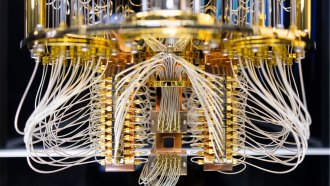
Here’s why scientists want a good quantum computer
These machines could tackle big problems in climate, medicine and more. But the tech is still in its infancy — and runs on truly strange physics.