All Stories
- Earth
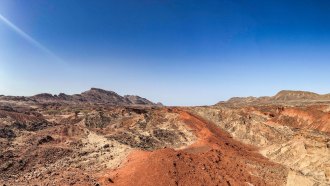
Earth’s crust under Africa is thinning in a way never seen before
Africa’s Turkana Rift Zone has been caught in the act of “necking" — a key point in breakup of continental crust.
- Agriculture
Scientists Say: Corn Sweat
Cornfields release moisture into the air — or “sweat” — a couple of ways. One is evaporation. The other is transpiration.
- Brain
VR can train the human brain to treat wings like real limbs
Virtual "flying" coaching, based on bird flight, took only a week. Afterward, participants’ brains seemed to view VR wings almost like true limbs.
- Animals
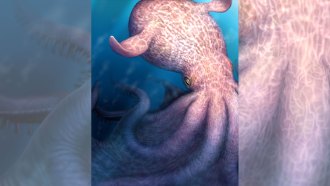
Giant school bus–sized octopuses may have once ruled the oceans
Some of these predators were as long as whales. Roaming the seas more than 72 million years ago, the octopuses appear to have been the largest invertebrates ever known.
- Animals
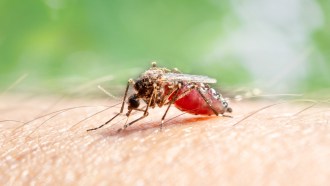
Mosquitoes may learn to like DEET, a common insect repellent
In lab tests, mosquitoes exposed to DEET while feeding learned to associate the chemical with food.
- Environment
Experiment: Remove microplastics from water with yeast
Learn how yeast can be used to remove microplastics from contaminated water with this experiment.
- Archaeology
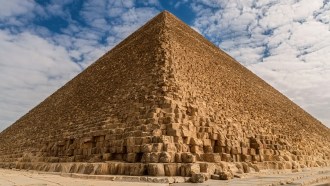
Mystery solved: Why earthquakes haven’t wrecked Egypt’s Great Pyramid
Its materials, shape and internal design have helped this ancient wonder withstand strong shaking.
- Chemistry
Scientists Say: Fluoride
This electrically charged form of fluorine boasts powerful tooth-strengthening abilities.
- Animals
This tree is the number one choice for forest mammals going number two
The strangler fig provides food and shelter for animals in the tropics. For at least 17 mammal species, it also serves as a toilet.
- Earth
Analyze This: A rocket reentry spiked metal levels in the atmosphere
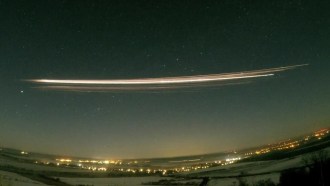
Detection of lithium from a SpaceX rocket reentering the atmosphere offers new evidence that space debris could harm the ozone layer.
- Animals
The dawn of animal evolution saw a bizarre array of sea creatures
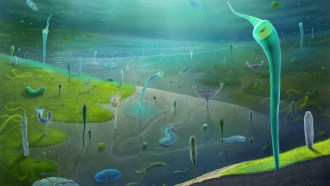
Newfound fossils turned up a strange zoo of often-complex creatures, including some suggesting that evolution of left-right symmetry occurred earlier than once though.
- Earth
Scientists Say: Snow line
On Earth, this line marks the edge of snow-covered ground. In space, it marks a spot where a certain molecule might freeze.