All Stories
- Space
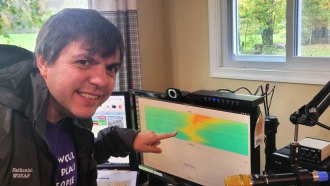
This space physicist uses radios to study eclipses
Nathaniel Frissell uses radio data to study how eclipses affect a layer of the atmosphere called the ionosphere.
- Animals
Which way is up? Insects may lose track near artificial lights
Flying insects may use light to figure out where the sky is. But artificial lights can send them veering off course, high-speed video suggests.
- Animals
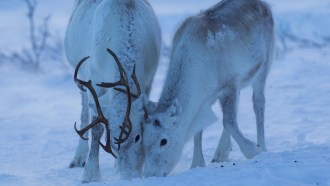
Reindeer can chew food in their sleep
Brain waves and behaviors suggest that reindeer can doze while chewing.
- Plants
Scientists Say: Marcescence
Autumn turns to winter, yet some trees' dead leaves keep hanging on.
- Animals
Spiders that fall into water use reflected light to find land
When elongate stilt spiders fall into water, they head for areas that don’t reflect light, studies show. This cue appears to signal dry land.
- Ecosystems
A weird upside-down world lurks beneath Antarctica’s ice
A vast swath of ocean surrounds Antarctica, hidden under the ice. Here, strange creatures burrow into the dark underbelly of a floating glacier.
- Physics
Physics explains why poured water burbles the way it does
The loudness of falling water depends on the height of the pour and the thickness of the stream.
- Animals
Let’s learn about birdwatching for beginners
One birdwatcher unpacks the personal and scientific rewards of birding, and how to get started.
- Animals
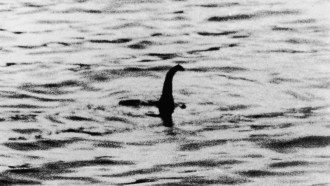
Have you seen Bigfoot or the Loch Ness Monster? Probably not
Floe Foxon is a data scientist by day. In his free time, he applies his skills to astronomy, cryptology and sightings of mythical creatures.
- Materials Science
Scientists Say: 2-D Material
Two-dimensional materials such as graphene could improve electronics, carbon capture and more.
- Animals
Swimming in schools lets fish save lots of energy
Each tail flap uses less than half as much energy than swimming solo, making it easier for fish to catch their breath after an underwater sprint.
- Artificial Intelligence
To ‘green’ AI, scientists are making it less resource-hungry
Energy demands of ChatGPT and similar AI tools can threaten Earth’s climate. So researchers have begun redesigning how to run data centers and build AI.