All Stories
- Tech
Recycling rare-earth elements is hard — but worth it
As demand for these valuable metals has been skyrocketing, scientists have begun inventing new — and greener — ways to reuse what they have in hand.
- Earth
Rare earths’ hidden electrons make much of modern tech possible
Because of their unique chemistry, rare-earth elements can generate powerful magnetic fields and fine-tune light for a wide range of applications.
- Environment
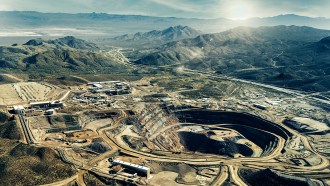
Rare-earth mining is dirty but key to a climate-friendlier future
That’s spurring new research to find a steady but safer supply of these precious metals, including in the United States.
- Brain
Ingredients in popular snack foods can make them addictive
Researchers find that highly processed foods rich in sugar and added fat may be as addictive as tobacco.
- Plants
Mimosa plant ‘muscles’ fold tickled leaves fast
A mimosa plant uses special cells to close leaflets when bumped and then reopen them — again and again.
- Earth
Scientists Say: Altitude
Altitude is used to describe heights in geography, astronomy and math.
- Tech
A new solar-powered gel purifies water in a flash
The unusual, fruit-inspired structure of this material provides quick filtration that could satisfy people's daily water needs.
- Animals
People and animals sometimes team up to hunt for food
Dolphins working with people to catch fish recently made a big splash. But humans have a long history of cooperating with other animals.
- Animals
Pokémon ‘evolution’ looks more like metamorphosis
Pokémon “evolve” into larger, more powerful forms within seconds, but this evolution more closely resembles another biological process — metamorphosis.
- Animals
These beetles ‘drink’ water using their butts
Red flour beetles can survive in very dry environments. New research shows how the beetles can suck water from the air using their rear ends.
- Planets
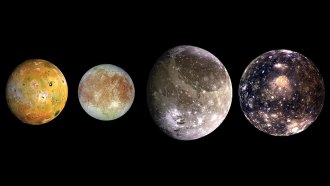
Let’s learn about Jupiter’s moons
Jupiter has nearly 100 known moons — some of which look like prime spots to search for alien life.
- Space
Scientists Say: Accretion Disk
Cosmic swirls of gas, dust and plasma, accretion disks reveal the shadowy silhouettes of black holes and more.