Ecosystems: Interactions, Energy, and Dynamics
- Animals
People and animals sometimes team up to hunt for food
Dolphins working with people to catch fish recently made a big splash. But humans have a long history of cooperating with other animals.
- Animals
Pokémon ‘evolution’ looks more like metamorphosis
Pokémon “evolve” into larger, more powerful forms within seconds, but this evolution more closely resembles another biological process — metamorphosis.
- Animals
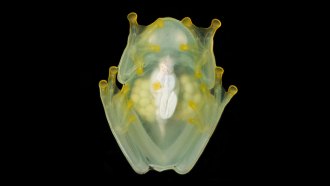
Sleeping glass frogs go into stealth mode by hiding red blood cells
Glass frogs snoozing among leaves blend in by hiding almost all their red blood cells in their liver.
- Animals
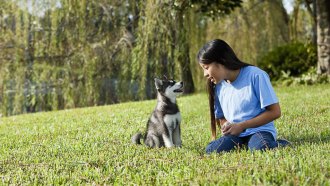
Analyze This: Puppies naturally mimic human actions
Unlike cats, whose ancestors hunted alone, dogs evolved from a species that hunted in packs. Being social might explain why pups copy humans.
- Animals
This biologist uses microwave radiation to save endangered species
Pei-Chih Lee works to preserve genetic material that can help researchers learn more about endangered animals, such as pandas and clouded leopards.
- Environment
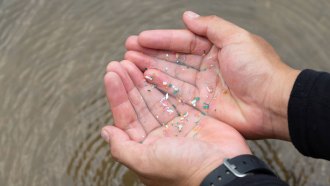
Sea life may suffer as plastic bits alter metals in water
This interplay between plastics and metals could affect how each affects the environment — and suggests opportunities for controlling their risks.
- Animals
Random hops always bring jumping beans to shade — eventually
It’s not fast, but jumping beans use randomness to maximize their chances of getting out of the sun’s heat.
- Health & Medicine
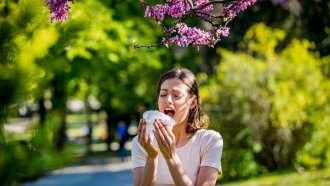
Let’s learn about allergies
Allergies are caused by the body’s immune system overreacting to harmless substances.
- Health & Medicine
New brain scans may show if a concussion has not yet healed
Concussions change certain brain waves, and delta waves may be the best signs of when teens can return to competitive sports.
- Microbes
Bacteria give some cheeses their distinct flavors
Linking types of bacteria to specific flavors could help cheesemakers tweak their products — or even develop new cheese flavor.
- Chemistry
Scientists Say: Rubisco
Rubisco is a key protein in the process of photosynthesis, which feeds plants — and, in turn, us.
- Animals
Prairie voles can couple up even without the ‘love hormone’
Scientists thought the chemical oxytocin was required to make prairie voles mate. They were wrong.