Matter and Its Interactions
- Chemistry
Copper ‘foam’ could be used as filters for COVID-19 masks
The lightweight new material could serve as a washable and recyclable, eco-friendly alternative for many current mask filters.
- Chemistry
Scientists Say: Alkaline
Alkaline chemicals are basic — substances that produce hydroxide ions in solution.
- Chemistry
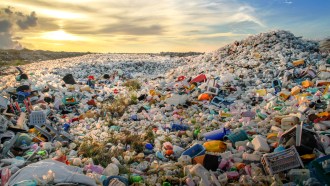
New recycling technologies could keep more plastic out of landfills
Recycling plastics is really hard — especially into useful materials. But new chemical tricks could make recycling easier.
- Chemistry
Explainer: What are chemical bonds?
When various particles, atoms, ions or molecules come together to form a substance, they are held together with chemical bonds.
- Health & Medicine
Bandages made from crab shells speed healing
The chitin in seafood wastes, insect “bones” and fungi is a chemist’s dream. Used in a new medical dressing, it beats regular gauze for wound healing.
- Chemistry
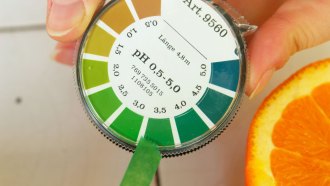
Let’s learn about acids and bases
Acids give away particles with positive charge. Bases accept positively charged particles. They are both critical for chemical reactions.
- Chemistry
Extreme pressure? Diamonds can take it
Diamond retains its structure even at extreme pressures, which could reveal how carbon behaves in the cores of some exoplanets.
- Climate
Let’s learn about snow
Snow is more than just frozen water vapor. Scientists are studying everything from its shape to other planets where snowflakes fall.
- Physics
Scientists Say: Piezoelectric
Piezoelectric materials produce an electric voltage when they are bent or squished. This can let us harvest electricity from movement.
- Physics
Physicists have clocked the shortest time span ever
The experiment revealed how long it takes light to cross a hydrogen molecule: just a couple hundred zeptoseconds.
- Chemistry
A new catalyst turns greenhouse gas into jet fuel
The catalyst is an improvement over its predecessors. Made of cheap materials like iron, it produces jet fuel in a single step.
- Agriculture
Dew collector brings water to thirsty plants
This invention grabs water from the air at night. All it needs is the sun’s warmth the next day to release that moisture to growing plants.