MS-ESS2-2
Construct an explanation based on evidence for how geoscience processes have changed Earth's surface at varying time and spatial scales.
- Microbes
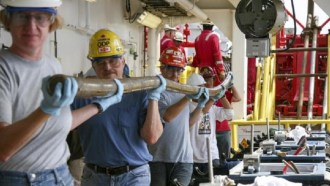
Life’s ultra-slow lane is deep beneath the sea
Biologists had suspected the deep seafloor would be little more than barren sediment. But they found a surprising amount of oxygen — and life.
- Earth
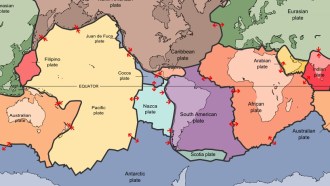
Explainer: Understanding plate tectonics
Plate tectonics is the process whereby Earth continually rebuilds itself — and causes destructive events like earthquakes and volcanic eruptions.
- Animals
Tar pit clues provide ice age news
New analyses of insects and mammals trapped in the La Brea Tar Pits point to climate surprises during the last ice age.
- Earth
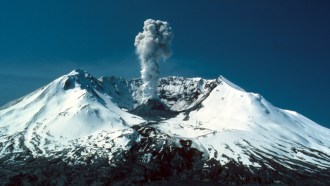
Explainer: The volcano basics
Here’s an overview of what they are, where they form and the many ways they pose dangers.
- Physics
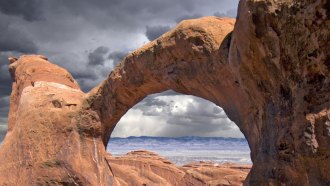
Bracing sand sculptures with gravity
Natural sculptures of sandstone withstand strong winds and rains. The reason, a new study concludes: Gravity holds the sand grains together.
- Earth
Thirst for water moves and shakes California
Here’s a scary cost to pumping up groundwater to slake the thirst of crops in California’s Central Valley: It may uplift nearby mountains and trigger tiny earthquakes, experts find.
- Math
Teen puts calculus on ice
Jacob Nichols wondered if he could use calculus to find the volume of the icicles building up outside his house. His study earned him a spot at the 2014 Intel International Science and Engineering Fair.
- Earth
The quake that shook up geology
North America’s biggest earthquake struck 50 years ago. Here’s what science has learned about Earth since the 1964 Great Alaskan Earthquake.
- Environment
Does lightning sculpt mountains?
A new study sparks debate about how much rubble on a mountainside has been blasted loose by powerful bolts from the sky.
- Earth
Explainer: Ice sheets and glaciers
Ice sheets and glaciers give scientists clues about climate change.
- Earth
Explainer: Antarctica, land of lakes
There are many, although they tend to be buried under rivers of ice.
- Earth
Big rocks’ balancing acts
Scientists study how balanced boulders resist falling over — and what that may say about earthquakes.