MS-ETS1-1
Define the criteria and constraints of a design problem with sufficient precision to ensure a successful solution, taking into account relevant scientific principles and potential impacts on people and the natural environment that may limit possible solutions.
- Planets
Here’s how future Martians might take their first breaths
Mars would need an atmosphere thick enough to hold heat and with enough oxygen for people to breathe. This is how we might terraform Mars.
- Artificial Intelligence
This researcher investigates the risks of digitally cloning the dead
Katarzyna Nowaczyk-Basińska investigates the risk of AI-driven grief bots — while commuting between Poland and England.
- Environment
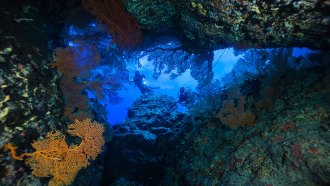
New ocean sanctuaries house young coral and even flee peril
Two ISEF finalists want to foster growth of new coral reefs. So these teens designed and built self-navigating, undersea houseboats for coral larvae.
- Environment
Eco-friendly sunscreen? That’s bananas!
Bananas make their own natural sunscreens. A teen thinks these could work to protect our skin as well, while being safe for aquatic life.
- Tech
You can ‘grab’ these virtual displays and manipulate them midair
Such interactive floating graphics and virtual objects could be used to make more immersive video games and museum exhibits.
- Chemistry
Teen finds cheaper way to make drugs against killer viruses
This drug-making achievement also nabbed the top award — and $100,000 in prize money — at the 2025 Regeneron ISEF competition.
- Animals
Lab-grown mosquitoes could help protect Hawaii’s native birds
To curb the spread of avian malaria, a teen researcher found a way to make those mosquitoes grow faster and stronger.
- Environment
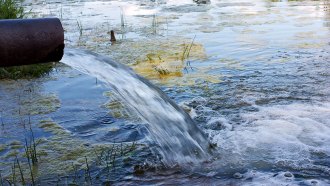
New water treatment process removes pollutants most now don’t
The two-step water treatment process could cut not only excreted drugs flowing into waterways but also some nutrients that feed harmful algal blooms.
- Tech
Experiment: Make the fastest rubber band paddleboat
With a rubber band and some cardboard, you can build your own paddleboat to speed across the surface of a pool.
- Artificial Intelligence
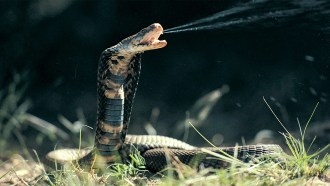
AI-designed proteins target toxins in deadly snake venom
The current way to produce antivenoms is outdated. In lab tests, AI-designed proteins could save mice from a lethal dose of snake toxin.
- Science & Society
Does your natural history museum need a makeover?
A lot of their old-fashioned dioramas — a type of exhibit — are biased, boring or even unscientific. Here’s what modern museums are doing to fix that.
- Genetics
This young biologist looked for links between diet and dyslexia
Thermo Fisher JIC finalist Giselle Drewett wanted to know how lifestyle might influence a gene related to dyslexia.