MS-PS1-1
Develop models to describe the atomic composition of simple molecules and extended structures.
- Chemistry
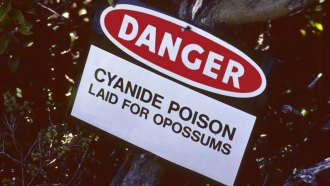
Scientists Say: Cyanide
Cyanides are poisonous. But they are more than that. This group of compounds is used in everything from mining to capturing fish.
- Brain
A ‘cocktail’ in the brain can trigger sleep
A new study finds that a ‘cocktail’ of chemicals in the brain can directly cause mice to fall asleep or waken.
- Physics
Possibility of strange new particle surprises physicists
Last winter, physicists at the Large Hadron Collider detected hints of a particle beyond their wildest dreams. Soon they may learn if it’s real.
- Chemistry
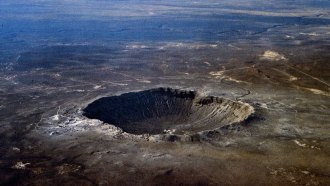
Smash hit: Making ‘diamond’ that’s harder than diamonds
Scientists had suspected extreme meteorite impacts might turn graphite into an unusual type of diamond. Now they’ve seen it happen — in under a nanosecond.
- Chemistry
Olive oil untangles plastic
Vegetable oils can make plastic fibers stronger. And the process is safer and better for the environment than other detanglers.
- Materials Science
Long-sought subatomic particle ‘seen’ at last
Physicists have finally caught a brief glimpse of massless subatomic particles that were first predicted to exist 85 years ago. It’s the elusive Weyl fermion.
- Brain
Scientists Say: MRI
MRI is a technique used to diagnose diseases and to study the body. The machine can map internal structures, all the way down to tiny blood vessels.
- Chemistry
Scientists Say: Ion
Some atoms and molecules have a positive or negative electrical charge. These are called ions.
- Materials Science
Cool Jobs: Big future for super small science
Scientists using nanotechnology grow super-small but very useful tubes with walls no more than a few carbon atoms thick. Find out why as we meet three scientists behind this huge new movement in nanoscience.
-
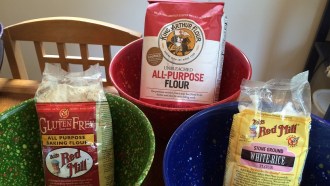
Cookie Science 13: The deal with gluten
To find out how to improve my gluten-free cookies, I learned a lot about what gluten does, and what other baking ingredients might take its place.
- Animals
When life exploded
Life exploded in diversity during the Cambrian Period. Experts are exploring what could account for this sudden change 540 million years ago.
- Health & Medicine
Cookie Science 2: Baking a testable hypothesis
I would like to make a gluten-free cookie that my friend can eat. But to do that, I need to come up with a hypothesis to test.