Life
- Health & Medicine
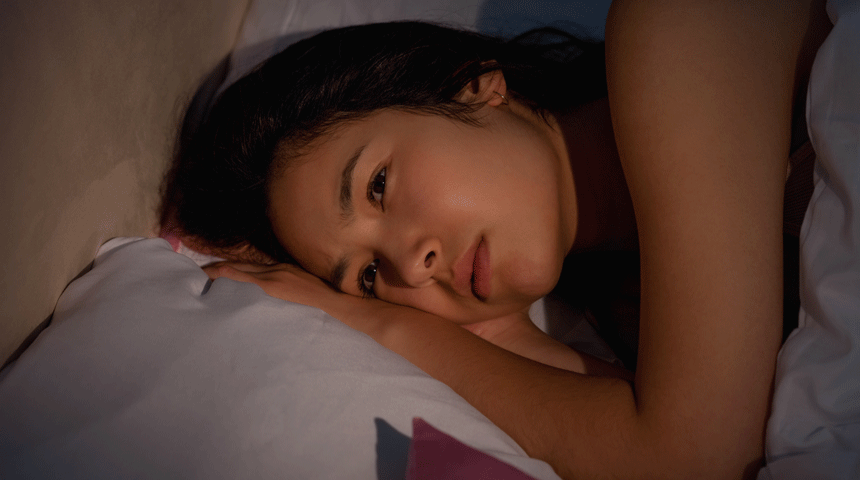
Sleepless nights can leave brains feeling anxious
Pulling an all-nighter boosts anxiety levels — and changes brain activity — the next morning, a new study finds.
- Animals
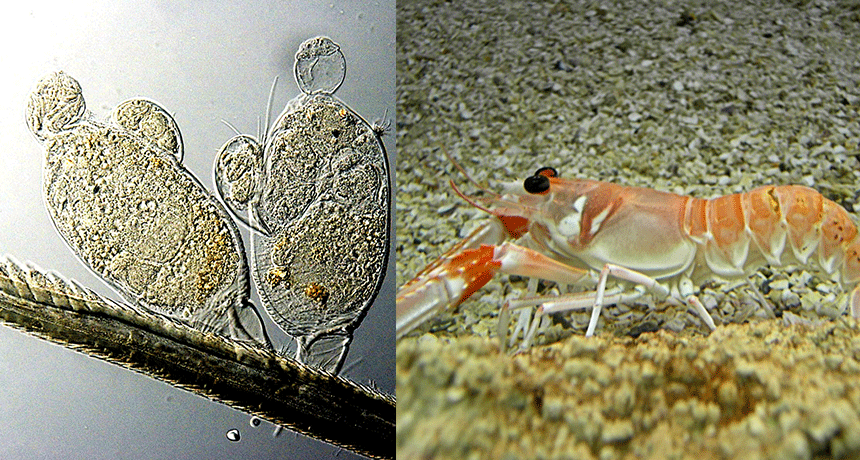
Living Mysteries: This complex beast lurks on lobster whiskers
A tiny animal discovered on a lobster’s whiskers shows that the smallest animals on Earth can be surprisingly complex.
- Life
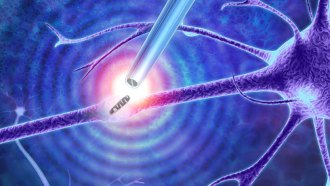
Electro-tweezers let scientists safely probe cells
These nanotweezers can sample the innards of cells without killing them. They use an electric field to net materials for study. And they are gentle enough to repeatedly probe the same cell.
- Animals
How wombats make their unique cube-shaped poop
The elasticity of the wombat’s intestines helps the creature to shape its distinctive scat.
- Animals
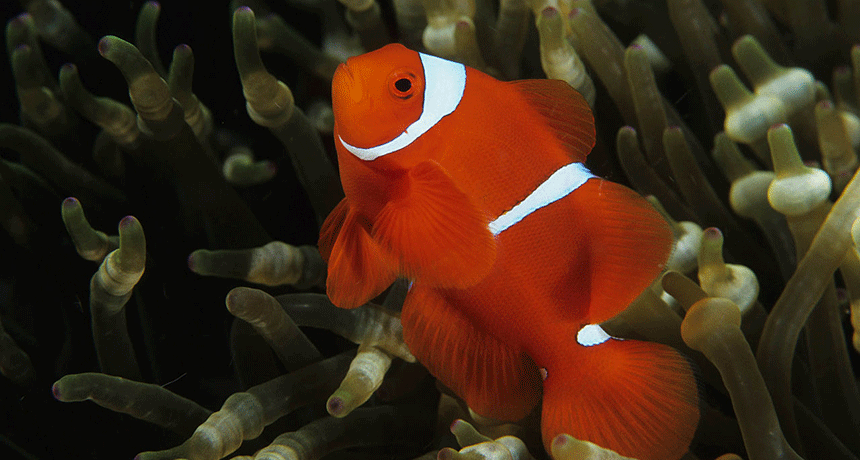
Scientists Say: Symbiosis
Two species can live together and support each other in a relationship called symbiosis.
- Animals
How do elephants eat cereal? With a pinch
Elephant trunks can grab everything from whole trees to cereal bits. To pick up fine grains, they press, then pinch.
- Animals
Bees stopped buzzing during the Great American Eclipse
A rare study of bees during a total solar eclipse finds that the insects buzzed around as usual — until the darkness of totality arrived.
- Brain
Zaps to spinal cord help paralyzed people walk
Sending electrical pulses to the spinal cord can help paralyzed people learn to walk again, new tests show.
- Genetics
Scientist reports first gene editing of humans
A Chinese researcher claims to have edited the DNA of human embryos. Babies from those embryos were born this month, and the news kicked off a firestorm of controversy.
- Chemistry
Six things that shouldn’t pollute your drinking water
These are why drinking untreated water can be harmful. But keep in mind, today’s water-treatment plants still won’t remove all of these.
- Chemistry
Explainer: How is water cleaned up for drinking
Unless you’re drinking well water, city folks typically get drinking water that has been treated in a water-treatment plant. Here’s what that means.
- Brain
Young people’s memory improves after stopping marijuana use
Paying teens and young adults to stop using marijuana improved their memory within one week. The results hint that some impairments from pot may be reversible — at least for a time.