Physics
- Chemistry
Scientists Say: Aerosol
Aerosols are tiny bits of solids or drops of liquids suspended in gas. Aerosols include mist, fog and soot, as well as pollution from fossil fuels.
- Materials Science
Take a look at this weird, bendy type of ice
These specially grown threads of ice bend into curves, then spring back when released.
- Physics
Scientists Say: Mass
Mass shows how much an object resists speeding up or slowing down when force is applied — a measure of how much matter is in it.
- Environment
Let’s learn about plastic pollution
The world is cluttered with plastic waste. All that junk kills animals far and wide.
- Animals
Abdominal fuzz makes bee bodies super slippery
Scientists find that tiny hairs on a honeybee’s abdomen reduce wear and tear as a bee’s outer skeletal parts rub against each other all day long.
- Animals
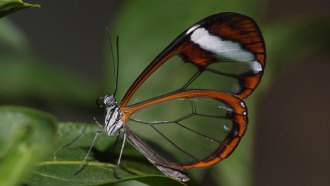
Uncovering secrets of the glasswing butterfly’s see-through wings
The tricks of its transparency include sparse, spindly scales and a waxy coated membrane.
- Physics
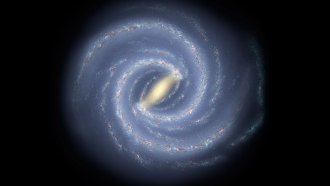
Spin in this Milky Way bar may show cosmic dark matter does exist
A method akin to studying a tree’s rings reveals the timeline of a slowdown in those stars at the heart of our Milky Way galaxy.
- Animals
Birds could get their sense of direction from quantum physics
Songbirds could detect north and south using a protein in their eye. It works somewhat like a compass.
- Physics
Nuclear clocks are nearly here
More precise clocks could improve technologies such as GPS and help scientists test major ideas in science.
- Physics
Light from space has record-breaking energy
Hundreds of newly detected gamma rays hint at environments in the cosmos that accelerate particles to energy extremes.
- Materials Science
‘Smart’ pasta morphs into fun shapes as it cooks
The trick to this shape-shifting are grooves cut into the raw pasta. Those grooves affect how the noodles swell as they cook.
- Physics
Stars made of antimatter could lurk in our galaxy
Fourteen sources of gamma rays in our galaxy look like they could be antistars — celestial bodies made of antimatter.