Space
- Planets
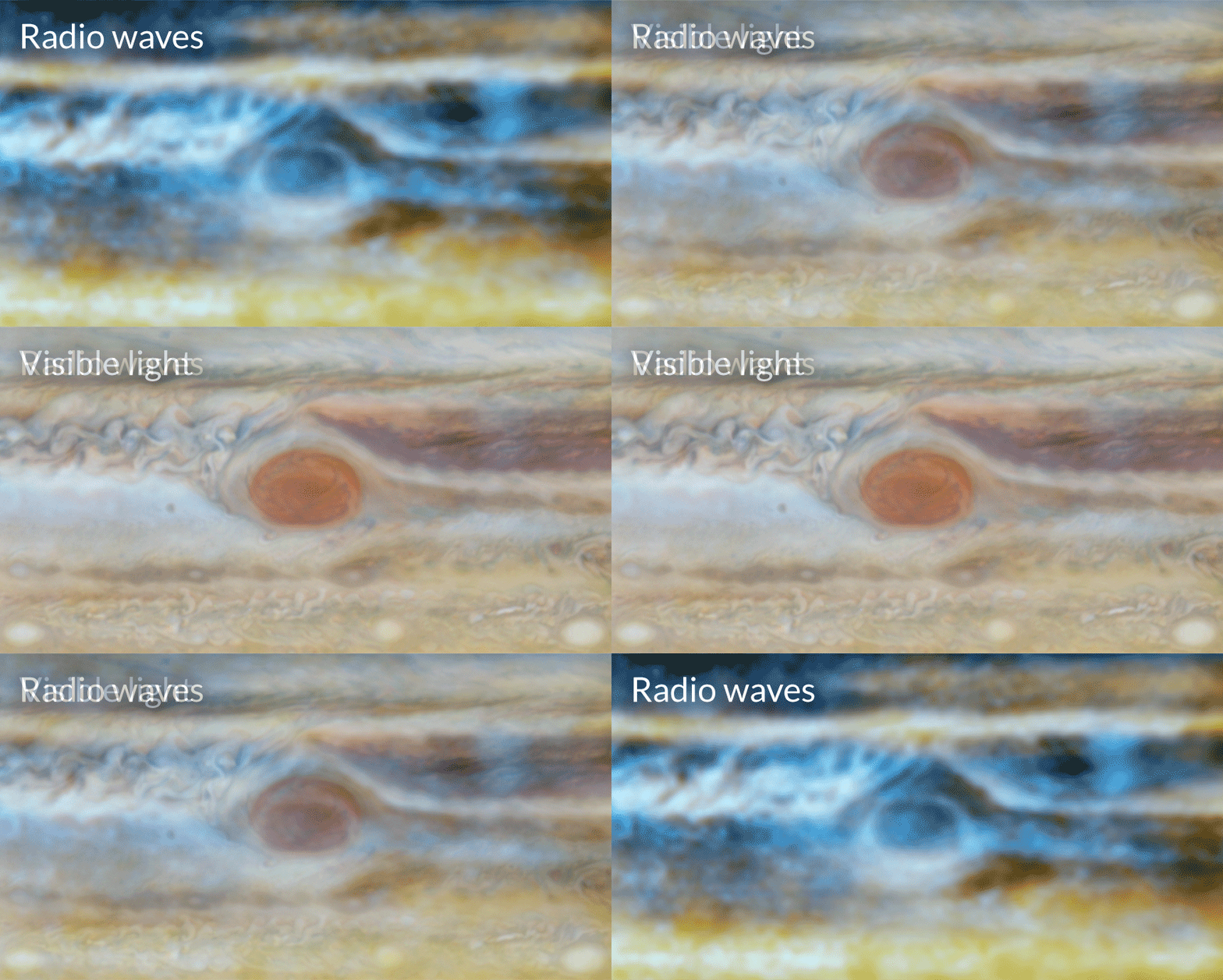
Jupiter’s Great Red Spot is really, really hot
The Great Red Spot, a storm churning on Jupiter for at least 150 years, may be helping to keep the planet warm, a new study finds.
- Space
A new, nonexplosive source of black holes?
At least one black hole may have formed from the collapse of a cloud of gas, which is not the usual birthing scheme. This might even be how some of the earliest gargantuan black holes developed.
- Planets
New clues in search for Planet Nine
New details about Planet Nine, a hypothetical object on the edge of our solar system, might help scientists actually find it.
- Earth
That’s no moon: Earth’s tiny tagalong
A newly discovered asteroid appears to be orbiting Earth, like a new mini-moon. In fact, it’s really orbiting the sun.
- Planets
By Jove! Juno-cam sends back first postcard
After a long and quiet trek through space, the Juno spacecraft showed it weathered the trip fine and is ready to get on with its business: probing what makes Jupiter tick.
- Planets
Success! The Juno spacecraft is now orbiting Jupiter
After nearly five years, the probe has safely reached its target. Juno will spend 20 months in orbit around the planet so that scientists can probe the many mysteries of this gas giant.
- Planets
Juno’s knocking on Jupiter’s door
The Juno spacecraft will peer into Jupiter’s clouds and fly in close to its monstrous auroras.
- Physics
Gravity waves are seen again
Four months after scientists announced the first detection of gravity waves, another set of ripples in spacetime have emerged. The new ones come from the clash of mid-size black holes in the distant universe.
- Space
Scientists Say: Wormhole
Scientists have predicted the presence of tunnels in space that connect two points in space and time. They are named for the shape they resemble.
- Climate
Jupiter’s stormy weather runs deep
Jupiter is covered in swirling storms. A new 3-D map of the planet’s atmosphere shows those storms start far, far below the clouds.
- Physics
Cool Jobs: Solar sleuthing
No star is closer than the sun, and yet there’s much science still don’t know about how it actually works. These scientists are helping solve the mysteries.
- Space
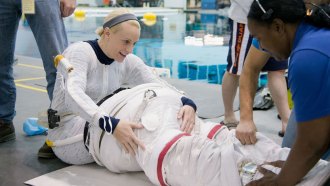
Biologist Kate Rubins is headed to space
Molecular biologist and astronaut Kate Rubins has spent 7 years preparing for a mission to the International Space Station. She blasts off this month.