All Stories
- Health & Medicine
Short exercise workouts can boost classroom performance
When students spend just nine minutes doing high-intensity interval exercises, their brains can work more efficiently, new data show.
- Chemistry
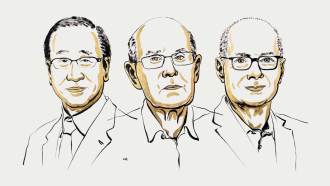
Structures that work like Hermione’s magic handbag land a chemistry Nobel
Richard Robson, Susumu Kitagawa and Omar Yaghi developed these metal-organic frameworks, which can trap pollutants, collect water from air and more.
- Health & Medicine
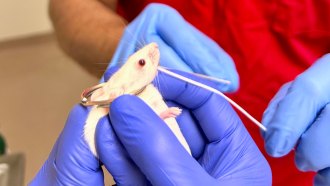
Floss delivers flu vaccine to mice needle-free
The creative solution may one day allow people to vaccinate themselves — no injection needed.
- Space
The Vera Rubin Observatory is set to revolutionize astronomy
Equipped with the world’s largest digital camera, this new telescope is poised to help solve some of the universe’s biggest mysteries.
- Physics
Discoveries behind quantum computers win the Nobel Prize in physics
John Clarke, Michel Devoret and John Martinis turned up quantum effects in an electric circuit. This 1980s find underlies today’s quantum computers.
- Physics
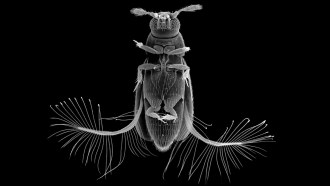
Comb-like wings help the tiniest insects swim through ‘syrupy’ air
When you're the size of a grain of sand, flying through air is like swimming through a syrup. Bristled wings help the tiniest insects manage this.
- Health & Medicine
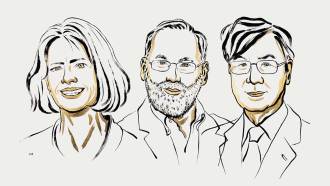
Finding cells that stop our body from attacking itself lands a Nobel
Shimon Sakaguchi won for discovering T-reg immune cells. Mary Brunkow and Fred Ramsdell won for showing the cells’ role in autoimmune disease.
- Plants
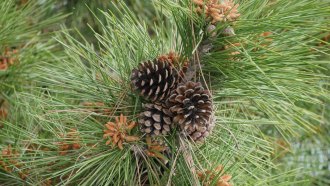
Unlock pinecone secrets with this science activity
Let’s find out how pinecones respond to different temperatures — by mimicking changes in weather from the comfort of our own kitchens!
- Space
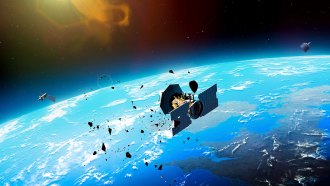
Scientists Say: Space junk
High-velocity space junk threatens space missions today. And the problem is growing.
- Environment
During heat waves, trees spew chemicals that worsen air pollution
New data point to how heat waves and other climate change will make it harder to curb ozone and other types of toxic air pollution — even outside of cities.
- Archaeology
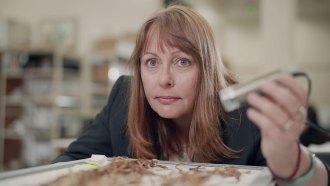
Knotted strands of 500-year-old hair tell a surprising story
Used in a device called a khipu, the hair reveals the owner’s simple diet. Those data now suggest that in Incan society, even some commoners kept records.
- Animals
Save the sharks to save the ocean
Humans have driven sharks and their cousins to the brink of extinction, but it’s not too late to turn the tide. At stake is the health of the entire ocean.