All Stories
- Archaeology
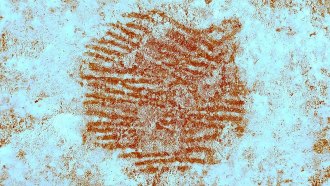
This may be the oldest, most complete Neandertal fingerprint ever seen
The print appears in a red ochre dot, which a Neandertal left on the ‘nose’ of a facelike rock roughly 43,000 years ago.
- Life
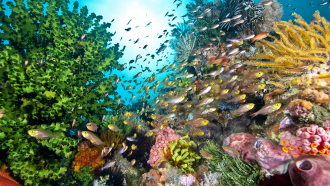
Scientists Say: Biodiversity
The coral reefs at Komodo, one of the Lesser Sunda Islands in Indonesia, are among the most diverse ecosystems on Earth.
- Physics
Zap! Peeling off tape can spark chemical reactions in the air
Ripping tape off a roll triggers flashes of lightning. Harnessing these micro-sparks might one day lead to greener chemistry.
- Animals
Here’s a spider whose barf is worse than its bite
These critters, which often make their homes on houseplants, don’t bother injecting venom. The spiders just vomit it all over their tied-up prey.
- Tech
Get a sneak peek at the tech you may use in the future
Holograms, 3-D printed clothing, personal robots — these technologies and more might one day transform your daily life.
- Health & Medicine
Sleeping in — but not too much — may ease anxiety
Getting up to two hours of weekend catch-up sleep lowers anxiety in teens, new research shows.
- Chemistry
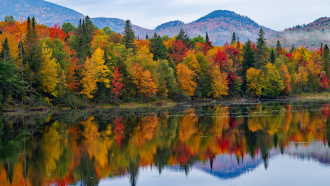
Uncover leaves’ hidden colors in this science activity
Let’s use a technique called paper chromatography to separate the pigments lurking in tree leaves.
- Environment
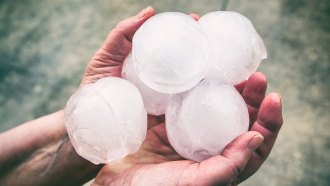
Watch out: Hail can get really big!
New data from hailstones suggest most of these icy chunks may not form the way scientists long thought.
- Health & Medicine
New study links chemical in plastics to fatal heart disease
More than one in eight deaths from heart disease in older adults is being linked to DEHP. The plastic chemical appears to play a role in many other health issues, too.
- Humans
A real-life vampire probably couldn’t survive on blood alone
Vampires often have human bodies. To survive on blood, they’d need to shed millions of years of evolution.
- Science & Society
A century later, impacts of the Scopes ‘Monkey Trial’ still echo
The case fostered a major distrust of experts in parts of U.S. society, especially those challenging the Bible’s account that humans never evolved.
- Animals
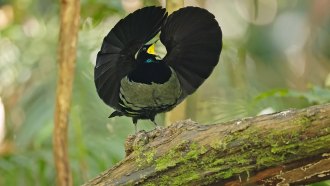
Birds of paradise have a newly discovered glow
Many male birds of paradise have bellies, bills and other parts that glow under certain types of light. This special gleam may help them woo mates.