All Stories
- Science & Society
Let’s learn about the Nobel Prize
Nobel Prizes are the highest honors in science. But the prizes are far from perfect measures of scientific impact.
- Space
Spacecraft need an extra boost to travel between stars
Star Wars makes space travel look easy by breaking the laws of physics. Off-screen, the technology for spacecraft to reach other worlds doesn’t exist yet.
- Archaeology
Scientists Say: Stone Age
This vast, mysterious stretch of time marks the dawn of human civilizations.
- Microbes
More than 100 types of bacteria found living in microwave ovens
More than 30 microwave ovens were sampled in a range of different settings. The microbes in them included ones that can cause food poisoning in people.
- Chemistry
Explainer: How cells use chemistry to make the electricity of life
Charged particles, or ions, constantly move in and out of cells. These migrations produce tiny electric currents, which power your brain, heart and more.
- Health & Medicine
Explainer: Anatomy of a heartbeat
Here’s how the heart pumps blood to each and every cell of the body. It beats roughly 60 times every minute, starting before we’re born.
- Brain
Zap, zap, zap! Our bodies are electric
Electricity powers key functions in the brain, heart and bone. Scientists are working to understand those currents to improve our health and moods.
- Physics
Weirdly, mayo can help study conditions ripe for nuclear fusion
Yes, mayo. The texture of the sandwich spread is perfect for mimicking what a fusion fuel capsule goes through when blasted with lasers.
- Animals
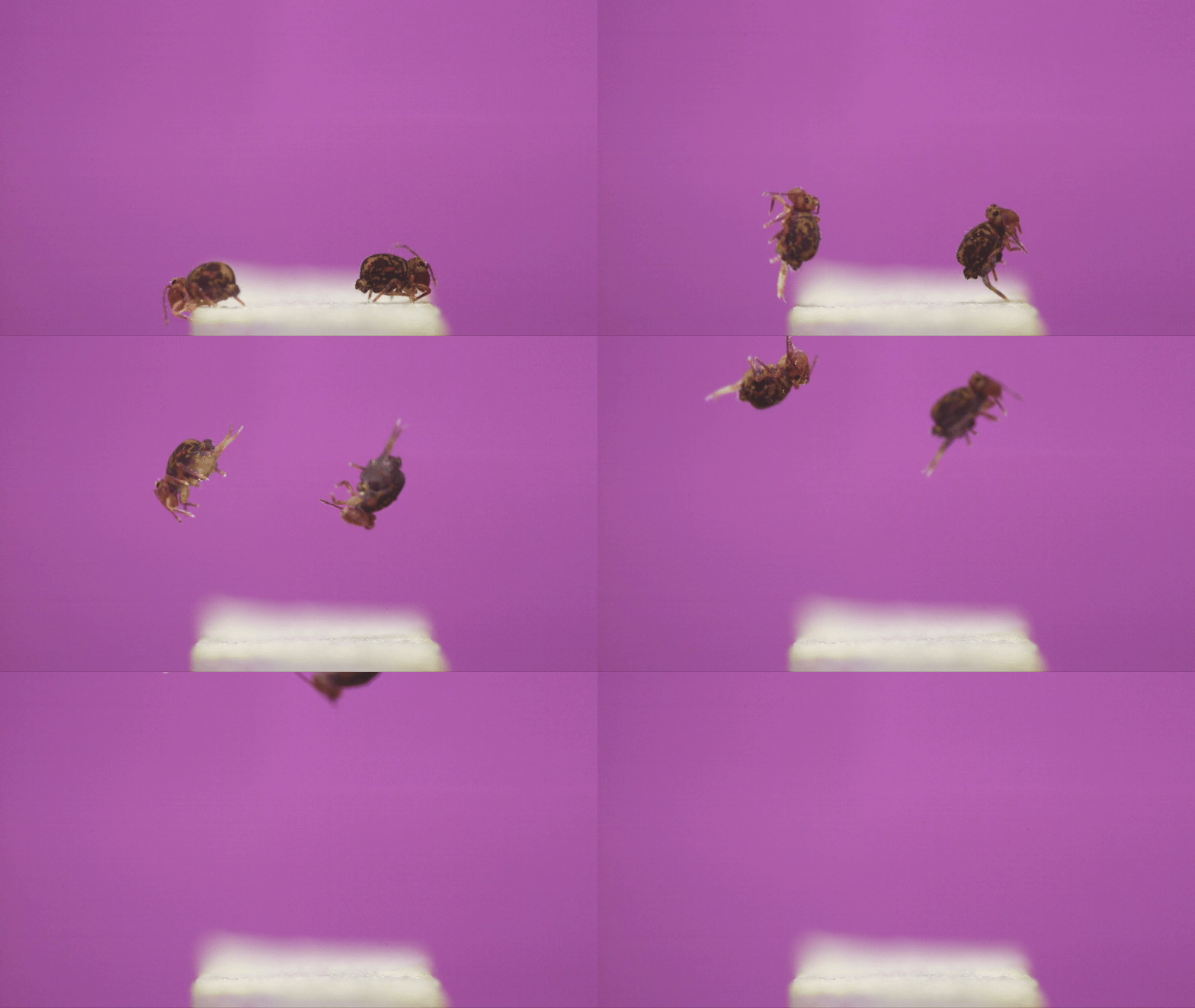
A springtail’s spring-loaded backflip is fast — really fast
Globular springtails can seem to vanish as they spin backwards at rates of up to 368 rotations per second! So don’t blink.
- Earth
Surprise! The jet stream can trigger cloud formation
Most cloud-seeding particles may come from a newly discovered mechanism — stratospheric intrusion.
- Space
Scientists Say: Campfire
These miniature solar flares could help solve a big mystery about our sun.
- Animals
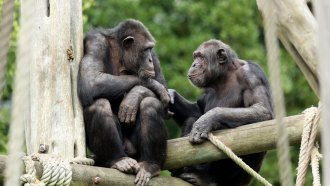
Chimps and bonobos recognize familiar faces even after decades apart
Chimpanzees and bonobos may boast the longest social memory of any animal besides humans.