Engineering Design
- Artificial Intelligence
Teen’s software for spotting AI-generated text just got personal
Rather than seeking generic signs of AI-generated text, it compares two texts to confirm they both share a writer’s unique style.
- Artificial Intelligence
AI, make me a video game
Developers can use AI to generate code, dialog, playable environments and more. But at its heart, making video games remains a creative human endeavor.
- Materials Science
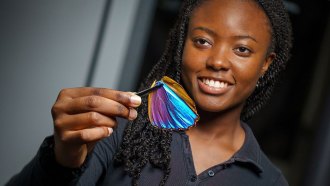
A beautiful blue butterfly wing offers a new way to study cancer
Once a morpho butterfly wing is placed atop a thin slice of tissue, shining polarized light through it can help reveal how likely breast cancer is to spread.
- Materials Science
This engineer uses light to get hearts pumping
Pengju Li designed a new type of pacemaker to help doctors during open-heart surgery.
- Tech
Squirty gels bring food-like flavors to virtual reality
A new device recreates complex flavors including lemonade, coffee and fish soup by delivering a mix of chemicals.
- Animals
Lab-grown mosquitoes could help protect Hawaii’s native birds
To curb the spread of avian malaria, a teen researcher found a way to make those mosquitoes grow faster and stronger.
- Brain
Brain scans may offer clues to the mental health of trans youth
A teen researcher identified a possible link between brain development and mental health in young trans people.
- Environment
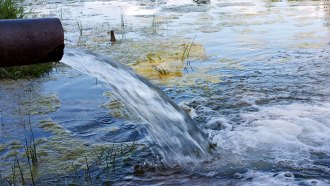
New water treatment process removes pollutants most now don’t
The two-step water treatment process could cut not only excreted drugs flowing into waterways but also some nutrients that feed harmful algal blooms.
- Earth
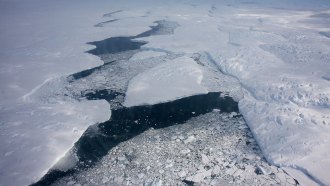
Can engineering save Antarctica’s most vulnerable glacier?
Bold engineering projects might stabilize Thwaites Glacier and slow sea level rise. But no one knows if they will work — or have serious side effects.
- Tech
Experiment: Make the fastest rubber band paddleboat
With a rubber band and some cardboard, you can build your own paddleboat to speed across the surface of a pool.
- Earth
Analyze This: Smartphone data may help improve GPS
Data from millions of phones helped fill in maps of the ionosphere, an atmospheric layer that can muddle radio signals key for navigation systems.
- Artificial Intelligence
AI-designed proteins target toxins in deadly snake venom
The current way to produce antivenoms is outdated. In lab tests, AI-designed proteins could save mice from a lethal dose of snake toxin.