HS-ETS1-1
Analyze a major global challenge to specify qualitative and quantitative criteria and constraints for solutions that account for societal needs and wants.
- Life
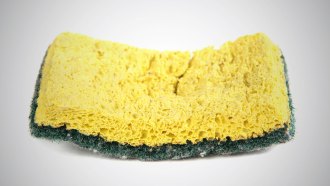
Kitchen sponges are bacteria’s dream home
Sponges are favorite spots for bacteria, partly because of the mixed-housing environment that the cleaner-uppers offer microbes.
- Chemistry
We all unknowingly eat plastic, which may host toxic pollutants
In the environment, plastics attract all types of toxic chemicals. If ingested, new data show, chemicals on those plastic bits may harm the gut.
- Materials Science
Engineers borrow a tree’s cellulose to toughen new materials
Cellulose gives plants their strength. Engineers are turning this renewable, environmentally friendly resource into brand new materials.
- Tech
A new device uses atoms’ quantum weirdness to peer underground
Quantum sensors like this one could monitor magma beneath volcanoes or uncover archaeological artifacts.
- Chemistry
A disinfectant made from sawdust knocks out deadly microbes
It’s made by pressure-cooking sawdust and water, is cheap and easy to make — and could lead to greener cleaning products than chemicals used today.
- Brain
Teen inventors say: There’s got to be a better way
Finalists in the 2022 Regeneron Science Talent Search are revamping prostheses, earthquake safety systems and air travel.
- Climate
Satellites find big climate threats — ultra-emitters of methane
Eyes in the sky show many of the worst methane emitters are in countries that produce a lot of oil and gas, such as Russia and the United States.
- Chemistry
New process can transform urban CO2 pollution into a resource
Researchers have developed a liquid metal that breaks down carbon dioxide in the air, converting it from a climate threat into a valuable raw material.
- Chemistry
Clothes dryers may be a major source of airborne microplastics
Scientists thought washing machines were a leading contributor of microplastics. Now it appears dryers may be an even bigger problem.
- Physics
Analyze This: Masks cut the distance that spit droplets fly
Both cloth masks and surgical masks reduced the distance spit traveled from a person talking or coughing by at least half, compared with no mask.
- Ecosystems
Recycling a climate-warming gas could make ‘greener’ farmed fish
Instead of warming the climate, methane gas can be collected to help farmers. Along the way, it may also save some fish.
- Chemistry
Snail slime + gold could boost the power of sunscreens and more
These two strange ingredients could make skin-care products that are better for both our skin and the environment.