HS-ETS1-1
Analyze a major global challenge to specify qualitative and quantitative criteria and constraints for solutions that account for societal needs and wants.
- Health & Medicine
High school scientists tackle community health and safety risks
Three finalists in the 2023 Regeneron Science Talent Search aim to improve suicide risk assessment, treatment of sickle cell disease and more.
- Chemistry
Scientists Say: Rubisco
Rubisco is a key protein in the process of photosynthesis, which feeds plants — and, in turn, us.
- Tech
Can a robot ever become your friend?
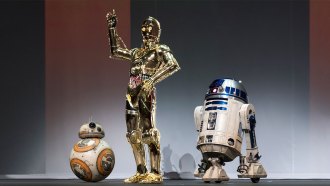
Social robots can teach, help and keep people company. What would it take for machines to form real friendships with people? And do we even want that?
- Environment
Bacterial ‘living wires’ could help protect the seas and climate
Long, thin bacteria that conduct electricity may be able to help clean up oil spills and reduce emissions of methane, a powerful greenhouse gas.
- Chemistry
Explainer: What is a hydrogel?
These unusual materials have a host of unusual properties. You can even make a starch-infused version in your kitchen.
- Health & Medicine
Should we use a genetic weapon against mosquitoes carrying malaria?
One gene drive to eliminate malaria seems to work in the lab. Now it’s time to ask local people if they want it released in the wild.
- Tech
Can computers think? Why this is proving so hard to answer
In 1950, Alan Turing proposed a test to tell a human from a computer. Today, that Turing test may tell us more about ourselves than about machines.
- Chemistry
Lego-like way to snap molecules together wins 2022 chemistry Nobel
This so-called ‘click chemistry’ allows scientists to build complex molecules in the lab and in living cells.
- Animals
Science is just starting to understand what animals feel
Animal-welfare researchers are studying the feelings and experiences of horses, octopuses and more.
- Earth
One 2022 tsunami may have been as tall as the Statue of Liberty
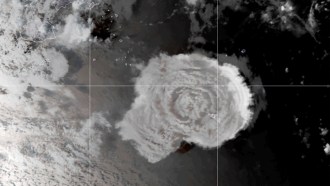
A massive volcanic eruption in the South Pacific, earlier this year, appears to have triggered one tsunami that was initially 90 meters (nearly 300 feet) tall.
- Tech
Welcome to the metaverse
The idea of the metaverse comes from science fiction. But technology could make such immersive virtual worlds a reality.
- Health & Medicine
New stick-on ‘sonar’ device lets you watch your own heart beat
This wearable patch might one day make personalized medicine affordable almost anywhere in the world.