HS-PS1-1
Use the periodic table as a model to predict the relative properties of elements based on the patterns of electrons in the outermost energy level of atoms.
- Chemistry
Explainer: What are chemical bonds?
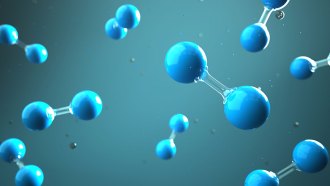
When various particles, atoms, ions or molecules come together to form a substance, they are held together with chemical bonds.
- Climate
Let’s learn about snow
Snow is more than just frozen water vapor. Scientists are studying everything from its shape to other planets where snowflakes fall.
- Chemistry
Scientists Say: Molecule
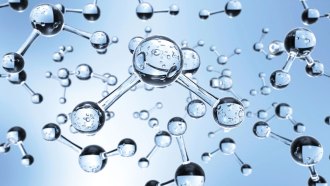
A molecule is a group of atoms linked with chemical bonds. It’s the smallest particle of a substance that has all of its chemical properties.
- Chemistry
Batteries should not burst into flames
Because lithium-ion batteries power modern life, they need to store a lot of energy. Now scientists are focusing on making them safer.
- Chemistry
Chemistry’s ever-useful periodic table celebrates a big birthday
2019 is the International Year of the Periodic Table. But the traditional chart is just one of many shapes that chemists and other scientists have developed to organize the elements.
-
- Materials Science
Nanowires made from silver are super stretchy
When silver nanowires stretch slowly, atoms on their surface can spread to heal weak spots. The discovery could lead to more flexible electronics.
- Physics
How to chill an object by sending its heat into space
Researchers have designed a device that can cool an object by radiating its energy into outer space. Think of it as a solar panel in reverse.
- Earth
Water sensor quickly detects algal poison
A new sensor can detect poisons from harmful algae within minutes so that drinking-water plants can start timely treatments.
- Chemistry
The newest elements finally have names
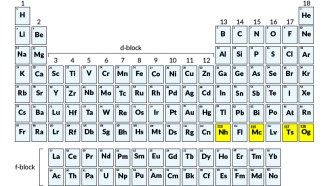
Nihonium? Tennessine? These aren’t body parts or medicines. They’re among the names just given to the four newest superheavy elements.
- Chemistry
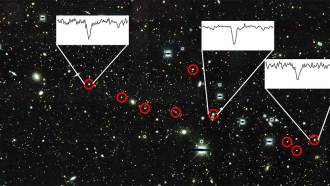
Dwarf galaxy spawned heavy elements
A study of nine stars in the dwarf galaxy Reticulum II found heavy elements. They had been produced after a violent stellar event sparked a chemical chain reaction.
- Materials Science
Long-sought subatomic particle ‘seen’ at last
Physicists have finally caught a brief glimpse of massless subatomic particles that were first predicted to exist 85 years ago. It’s the elusive Weyl fermion.