Waves and Their Applications in Technologies for Information Transfer
- Brain
A sense of touch could upgrade virtual reality, prosthetics and more
Scientists and engineers are trying to add touch to online shopping, virtual doctor appointments and artificial limbs.
- Health & Medicine
Cannabis may alter a teen’s developing brain
Marijuana use between ages 14 and 19 was linked to faster thinning of brain regions important in decision-making.
- Tech
Let’s learn about artificial intelligence
Computers are getting smarter all the time. At some tasks, they can even outsmart people.
- Tech
Headphones or earmuffs could replace needles in some disease testing
A new system that uses earmuffs to collect gases coming out the skin could help doctors diagnose a variety of diseases, scientists say.
- Climate
Explainer: Urban heat islands and how to cool them
Cities transform landscapes covered in plants to ones covered in heat-absorbing asphalt and concrete. But ways exist to cool these urban heat islands.
- Archaeology
How torchlight, lamps and fire illuminated Stone Age cave art
Experiments with stone lamps and torches are helping scientists see 12,500-year-old cave art with fresh eyes.
- Animals
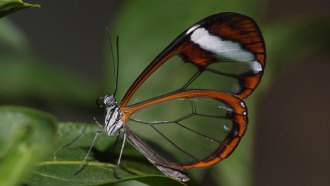
Uncovering secrets of the glasswing butterfly’s see-through wings
The tricks of its transparency include sparse, spindly scales and a waxy coated membrane.
- Animals
Birds could get their sense of direction from quantum physics
Songbirds could detect north and south using a protein in their eye. It works somewhat like a compass.
- Physics
Nuclear clocks are nearly here
More precise clocks could improve technologies such as GPS and help scientists test major ideas in science.
- Physics
Light from space has record-breaking energy
Hundreds of newly detected gamma rays hint at environments in the cosmos that accelerate particles to energy extremes.
- Chemistry
Sleep-friendlier lighting is on the way
Chemists have created a new glowing material for LEDs. It should lessen how much near-bedtime lighting impairs your ability to nod off.
- Physics
Stars made of antimatter could lurk in our galaxy
Fourteen sources of gamma rays in our galaxy look like they could be antistars — celestial bodies made of antimatter.