Waves and Their Applications in Technologies for Information Transfer
- Physics
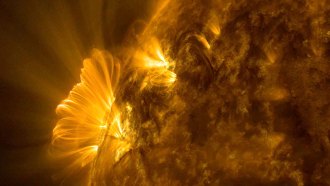
Some of the sun’s iconic coronal loops may be ghostly illusions
Wrinkles in the sun’s outer atmosphere might trick the eye into seeing glowing arches, scientists now report.
- Space
We finally have an image of the black hole at the heart of our galaxy
New observations from the Event Horizon Telescope reveal the chaotic region around the Milky Way’s central black hole, Sagittarius A*, in extreme detail.
- Planets
Analyze This: Some 5,000 planets orbit stars other than our sun
A new cache of confirmed exoplanet discoveries marks a milestone in planets found beyond our solar system.
- Science & Society
This sun-powered system delivers energy as it pulls water from the air
The device not only produces electricity but also harvests water for drinking or crops. It could be especially useful in remote and dry parts of the world.
- Materials Science
This new fabric can ‘hear’ sounds or broadcast them
With special fibers that convert tiny vibrations to voltages, a new fabric senses sound. Someday, such fabrics could monitor the body or aid hearing.
- Environment
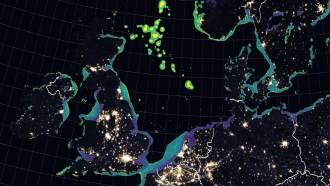
Night lights make even the seas bright
Light from coastal cities and offshore development may shine deep enough to disrupt tiny critters living dozens of meters (yards) below the surface.
- Chemistry
New cloth cools you when you’re hot, warms you when you’re cold
Scientists 3-D printed the new fabric, which has even more tricks up its sleeve — such as conducting electricity and resisting radio waves.
- Physics
Scientists Say: Doppler effect
The Doppler effect is a perceived change in the frequency of light or sound waves due to the wave source moving relative to an observer.
- Earth
The Alps’ Matterhorn shows how much even big mountains sway
Such mountain sway data can help planners map high-risk zones for peaks, bridges or any large structures.
- Physics
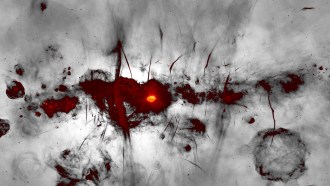
Wild art? No, it’s a radio image of the heart of our Milky Way
Eyelash-like radio filaments accent the brightest feature in this image — a supermassive black hole.
- Earth
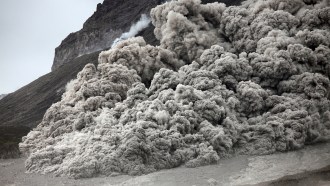
Volcanic avalanches may be more destructive than previously thought
Pressures within these pyroclastic flows may be as much as three times as high as observations had suggested.
- Animals
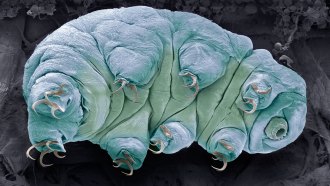
Living mysteries: Why teeny-weeny tardigrades are tough as nails
Tardigrades often live in cool, damp moss. Their cushy life has somehow prepared them to survive the lethal radiation of outer space.