Animals
- Animals
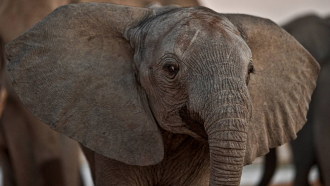
Could an elephant ever fly?
Dumbo is known as the only elephant to take flight. He’s not real. But could he be?
- Animals
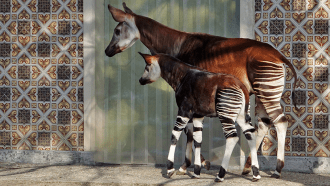
Scientists Say: Okapi
Okapis are African mammals that look a bit like horses and a bit like zebras. But they’re most closely related to giraffes.
- Animals
Bones show ancient marine reptile was a big baby
A new study of a rare baby plesiosaur reveals that these marine reptiles were huge at birth, then continued to grow speedily.
- Animals
Bee parasite is more werewolf than vampire
Inventing fake bee larvae prompts scientists to rethink how a mite — ominously named Varroa destructor — does its damage.
- Animals
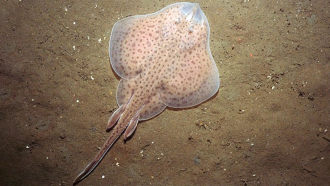
Ocean acidification may ground swimming skates
Fish might seem immune to acidic waters, but check their skeletons. They can be vulnerable and eventually alter how fish behave.
- Animals
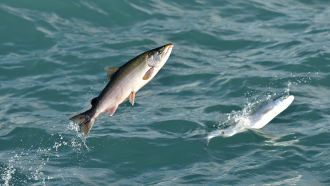
Is ocean acidification knocking the scents out of salmon?
In more acidic water, salmon don’t seem to recognize the smell of danger. Will their populations take a nosedive as carbon-dioxide levels rise?
- Animals
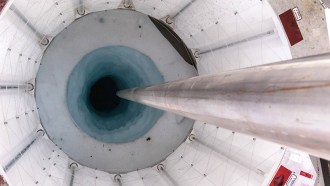
Animal graveyard found in deeply buried Antarctic lake
Mud from Antarctica’s Lake Mercer surprised scientists with what appeared to be the carcasses of tiny animals. A neighboring lake had only microbes.
- Animals
A Bolivian frog species returns from the dead
A Bolivian frog was missing in the wild for 10 years. Scientists feared chytrid fungus had driven the frog extinct. Then they found 5 survivors.
- Animals
Some male hummingbirds wield their bills as weapons
The shape of some hummingbird bills may reflect a trade-off between drinking nectar and fighting off the competition.
- Animals
These fuzz-covered flying reptiles had catlike whiskers
New fossils are changing the look of ancient flying reptiles called pterosaurs.
- Animals
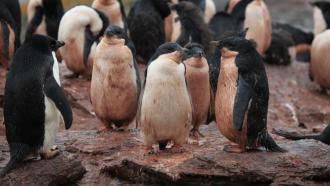
To monitor penguin diet from satellites, look to poop
Scientists have figured out what foods dominate an Adélie penguin colony’s diet by looking at Landsat imagery. But to do so, they had to start with penguin poop.
- Animals
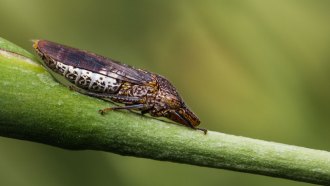
How some insects fling their pee
Insects called sharpshooters use a tiny barb on their rear ends to hurl their pee at 20 times the acceleration of Earth’s gravity.