Animals
- Animals
Some gifted dogs can learn to sort their toys
Among dogs known to be gifted word learners, some can also sort toys by how they are used during play time. It’s one sign of a complex thought process.
- Animals
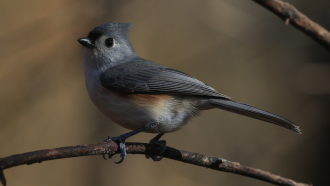
Scientists Say: Kleptotrichy
Based on the Greek words for theft and hair, kleptotrichy is a more common bird behavior than people thought.
- Animals
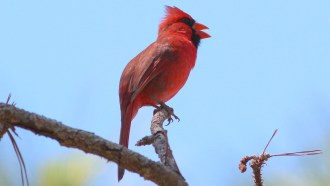
Birds are singing longer, thanks to light pollution
In light-polluted areas, birds spend an average of 50 minutes more per day singing. It’s unclear how that extra time might hurt or help the birds.
- Animals
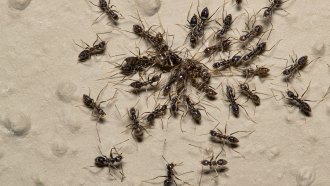
Ants are better team players than people [COMIC]
For ants, teamwork makes the dream work. For humans, teamwork can be a trip-up.
- Animals
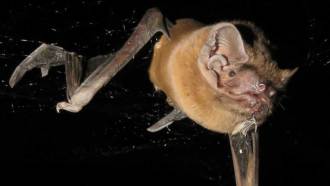
Analyze This: Some bats feast on songbirds midflight
Sensor data reveal greater noctule bats chasing, catching and chewing on birds during nighttime hunts.
- Animals
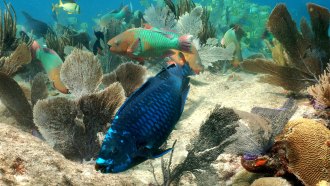
Parrotfish shape the future of coral reefs, one bite at a time
Could these colorful fish aid struggling coral? Yes, but not always. Parrotfish play a complex role in reefs — and sometimes may cause harm.
- Fossils
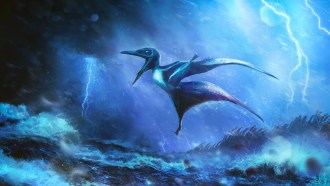
Baby pterosaurs likely died in violent Jurassic storms
Two hatchlings with broken arm bones point to ancient storms as the cause of mass casualties now preserved in Germany’s Solnhofen Limestone.
- Animals
Ripple bugs’ frilly feet inspired a water-striding robot
The insects’ nimble movements on the surface of water inspired a robot with automatically unfurling fans on its feet.
- Animals
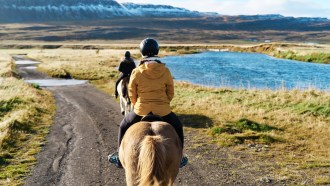
Horses became gentle and easy to ride thanks to two gene mutations
Horse breeders altered two genes by targeting certain traits in horses. One made the animals tamer. Another made their backs sturdy enough to carry riders.
- Animals
Let’s learn about venom
A bite or puncture from a venomous critter can cause paralysis, flesh rot, organ failure and many more violent — and sometimes fatal — symptoms.
- Fossils
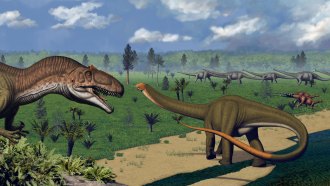
Fossil teeth reveal some dinos were fussy eaters
The type of calcium in those teeth points to what herbivores preferred to eat — whether soft leaves, rough twigs or something else.
- Physics
Scientists Say: Infrasound
“Listening” for changes in these deep rumblings can allow scientists to predict earthquakes and other geological events.