Fossils
- Fossils
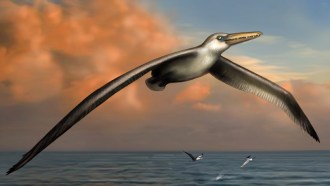
Mega-bird!
What may have been the bird world’s biggest flier ever had wings so long, they would have had trouble flapping fast enough to keep it aloft in tough winds. But this behemoth would have been able to soar both far and fast.
- Fossils
This dino-bird is super-feathered
This late-Jurassic dino was also a bird. Its ample coat of feathers emerged before any need for flight.
- Fossils
Hot-blooded dinos? Try lukewarm
New study finds these reptiles may have had an internal furnace that sort of resembled some sharks. It appeared to run neither hot nor cold.
- Fossils
Fossil hunting can start as child’s play
Paleontology isn’t just for professionals. You don’t even need to be a teen to sometimes make startling — and scientifically important — contributions.
- Fossils
Explainer: How a fossil forms
Minerals can replace any bone, shell or once-living tissue and also fill in the spaces between these hard parts, birthing a fossil.
- Fossils
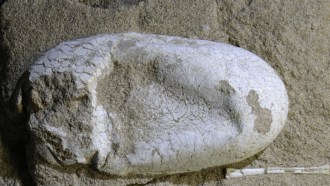
These prehistoric fliers likely nested together
Fossils in nest of newfound pterosaur species suggest these animals were part of a social network — and may even have lived communally.
- Animals
Surprise! Fossils in a flash
By studying how dead tissues decay — or turn to ‘instant’ fossils — scientists are gleaning helpful clues to what ancient life looked like.
- Fossils
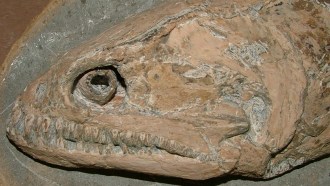
Lobster’s ancient ‘cousin’ was gentle giant
Some 500 million years ago, this top predator would have likely netted its meals with long bristly limbs.
- Fossils
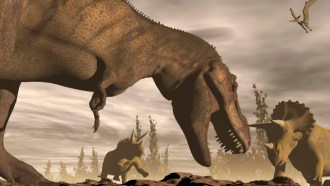
Scary ‘chicken’ roamed Earth with T. rex
Scientists have just pieced together evidence of a weird new dinosaur that sported sharp claws, feathers and a beak. And it just may have been one of the last dinos to roam Earth about 67 million years ago.
- Fossils
Reviving dinosaurs
With the help of computers, researchers are getting a pretty good idea of how these ancient creatures moved, walked and ate.
- Animals
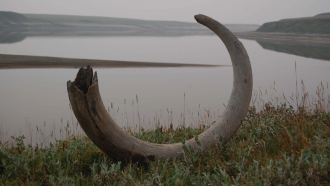
Flower loss doomed the mammoths
Woolly mammoths roamed the Arctic until about 10,000 years ago. Why they died out may trace to the vanishing of the mostly flowering plants on which they had been dining.
- Fossils
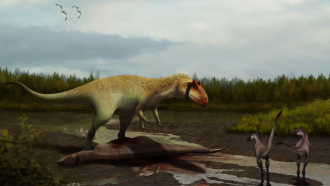
Early tyrannosaurs would have feared this predator
A newfound dinosaur fossil appears to explain why ancestors of T. rex didn’t begin their growth in size — and dominance — any earlier than they did.