Fossils
- Fossils
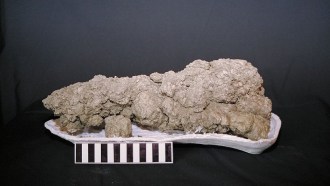
Scientists Say: Coprolite
Every living thing and signs of its existence — right down to their wastes — can fossilize under the right conditions. When poop fossilizes, it gets a special name.
- Earth
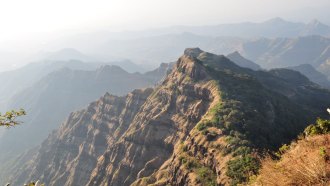
Dino double whammy
Most scientists think an asteroid helped kill off the dinosaurs. But new calculations suggest that asteroid might have gotten some help from a long series of volcanic eruptions in what is now India.
- Fossils
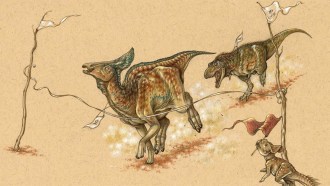
Dinos: Some were ‘marathoners’
The arrangement of major muscles in a duck-billed dinosaur’s legs would have helped them outrun predators such as T. rex, a new analysis suggests.
- Animals
Tar pit clues provide ice age news
New analyses of insects and mammals trapped in the La Brea Tar Pits point to climate surprises during the last ice age.
- Animals
When life exploded
Life exploded in diversity during the Cambrian Period. Experts are exploring what could account for this sudden change 540 million years ago.
- Fossils
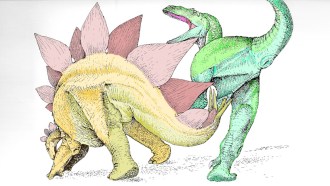
Spiked tail to the rescue!
A stegosaur’s bony ‘armor’ didn’t just fend off a predator’s teeth. The tail spikes could gore attackers, ultimately killing them, fossils now show.
- Fossils
Early dino-era start for modern mammals
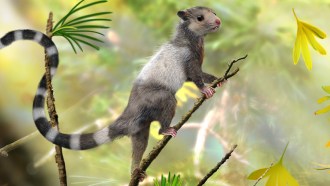
Fossils of an extinct group of rodent-sized mammals suggest they were related to modern mammals. These ancient remains push back the origin of mammals by many millions of years.
- Fossils
Biggest dino ever?
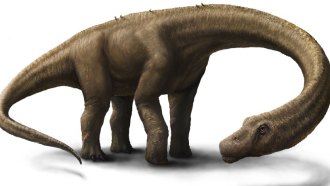
This plant-eater would have towered over even a T. rex. A truly huge brute, Dreadnoughtus means ‘fear nothing.’
- Fossils
Feathers: What every dino wore?
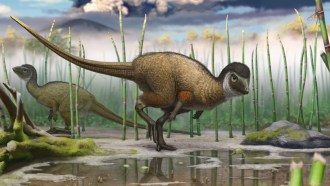
A dino discovery in Siberia suggests feathers were common among the ancient ‘lizards.’
- Fossils
Dinos ‘quickly’ shrunk into birds
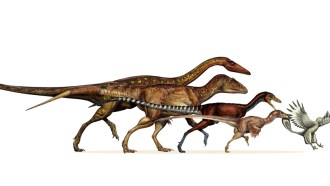
Scientists had long known birds descended from dinosaurs. A study now shows that the morphing from dinos into birds went along with a quick and steady shrinking of their body sizes.
- Fossils
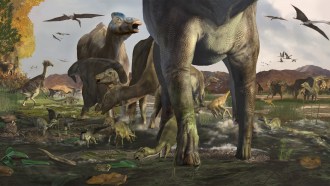
Some Arctic dinos lived in herds
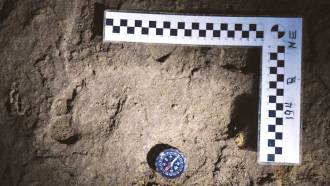
Fossil footprints retrieved from Alaska indicate that plant-eating duckbill dinos not only traveled as extended families but also spent their entire lives in the Arctic.
- Fossils
Newly dated footprints: Oldest human tracks?
These footprints, found nearly a half-century ago, may be almost four times older than first thought, scientists now report.