Health & Medicine
- Health & Medicine
Scientists Say: Umami
What’s the word for something savory? Umami is a taste, and is often described as being meaty.
- Brain
The most popular stories of 2015
Our readers love to read about health and wellness. Check out which stories were most popular.
- Brain
Brain damage seen in potent-marijuana smokers
Brain scans of people smoking potent forms of pot showed abnormalities in white matter. Studies have not yet looked to see if these changes are also linked with changes in memory, risk of depression or other types of harm.
- Animals
Algal poison can harm sea lion memory
Sea lions exposed to toxic algae can experience seizures and brain damage. New research shows that the toxin also causes impairments to memory.
- Brain
Bubbles may underlie trauma’s brain injury
Many soldiers and accident victims sustain traumatic brain injury that can affect memory, thinking and body movements. New research now studies whether tiny bubbles caused by pressure waves may trigger that damage.
- Agriculture
New gene resists our last-ditch drug
Antibiotic resistance continues to grow. Now, scientists have found a tiny loop of DNA that resists a drug doctors use as a last line of defense.
- Health & Medicine
Too many Facebook friends?
Can you have too many Facebook friends? Maybe so, says a new study. It links heavy Facebook use to levels of a stress hormone called cortisol.
- Health & Medicine
Nearsighted? Eye drops slow worsening vision
Myopia — or nearsightedness — is a growing problem worldwide. Low doses of an ancient drug could slow its development, without side effects.
- Genetics
Expert panel approves human gene editing
Scientists have recently been reporting big advances in the ability to tweak the genes of living organisms, including people. But some question the ethics of doing that. A panel of experts now says such research can go ahead — with one major exception.
- Health & Medicine
Heart damage linked to obesity in kids
Doctors are finding signs of heart damage in obese children as young as 8 years old.
- Health & Medicine
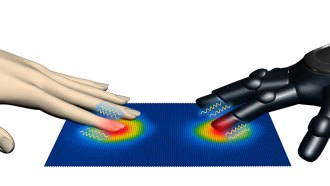
New e-skin feels heat, textures and more
Two new developments in electronic “skin” hold promise for making prosthetic devices that can provide a better sense of touch. One gets its great sensitivity from being modeled on the human fingertip.
- Chemistry
Some 3-D printing can leave toxic taint
The ”ink” inside some 3-D printers can leave toxic traces. In tests, these chemicals harmed baby fish. But lighting could render the parts safer.