All Stories
- Science & Society
Teen mental health: What role does social media play?
The Surgeon General advises that because social media is being linked to both good and harm, teens can use it — but should do so very carefully.
- Humans
Seven steps to boost your mood
Give yourself some quality “me time” every day. The goal is self-care and expression that can liberate you — and maybe even bring joy.
- Humans
Being a teen has always been hard; now it’s especially so
More U.S. children and teenagers are reporting mental illness than ever. With not enough doctors to treat all of them, here’s how to find help.
- Tech
Balsa wood transistors could usher in ‘greener’ electronics
Researchers in Sweden coaxed wood to conduct electricity, then used it to make a climate-friendlier building block of electronics.
- Animals
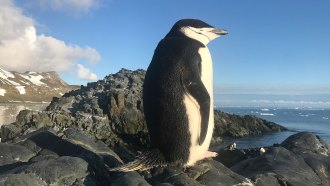
These penguins nap 10,000 times a day, for seconds at a time
Such an extreme sleep schedule may help nesting chinstrap penguins protect their young while still getting more than 11 hours of shut-eye.
- Archaeology
Analyze This: Stonehenge’s ‘Altar Stone’ has mysterious origins
After a century of searching for the source of the Altar Stone, scientists have yet to figure out where ancient people got the rock.
- Health & Medicine
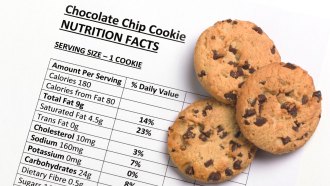
Scientists Say: Calorie
These little units help us measure energy transfer in chemistry, nutrition and beyond.
- Physics
Experiment: Where does a bouncing basketball’s energy go?
Let’s explore whether energy loss to heat could explain why a basketball doesn’t bounce back to its original height.
- Psychology
Pets and other animals can boost health and well-being
Living with animals seems to provide some health benefits, from lower stress levels to a stronger immune system.
- Chemistry
Pollution power? A new device turns carbon dioxide into fuel
Scientists made a device that converts the greenhouse gas into formate. This salt can then run a fuel cell to make electricity.
- Animals
Like tiny Jedis, rats can move digital objects with their brains
Rats imagined their way through a 3-D virtual world in a new study. The results hint at how brains think about places they aren’t physically in.
- Tech
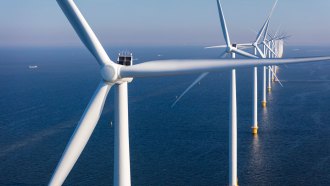
Offshore wind farms could do far more than just make clean power
Offshore wind farms cost more than onshore ones. But their ability to make ‘green’ hydrogen and capture carbon dioxide could help this wind power pay off.