
All Stories by Bethany Brookshire
- Climate
Scientists Say: Ozone
Ozone is a molecule made of three oxygen atoms. In a layer above the Earth, it protects us from harmful radiation, but too close to home, it can harm our health.
- Earth
Scientists Say: Speleology
This is the scientific study of caves, which can include what they’re made of, how they form and what lives in them.
- Agriculture
Scientists Say: Domestication
Domestication is the process of deliberately taking a wild organism — a plant or animal for instance — and making it a part of our daily lives.
- Life
Scientists Say: Biofilm
When times get tough, some microbes like to stick together. They form a mass stuck to a surface, called a biofilm.
- Animals
Listening to fish love songs can predict their numbers
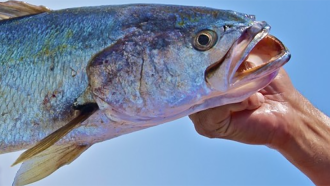
Gulf corvinas croak for mates while in groups of millions. By listening to their undersea serenades, scientists may be able to estimate how many are out there.
- Chemistry
Scientists Say: Photochromic
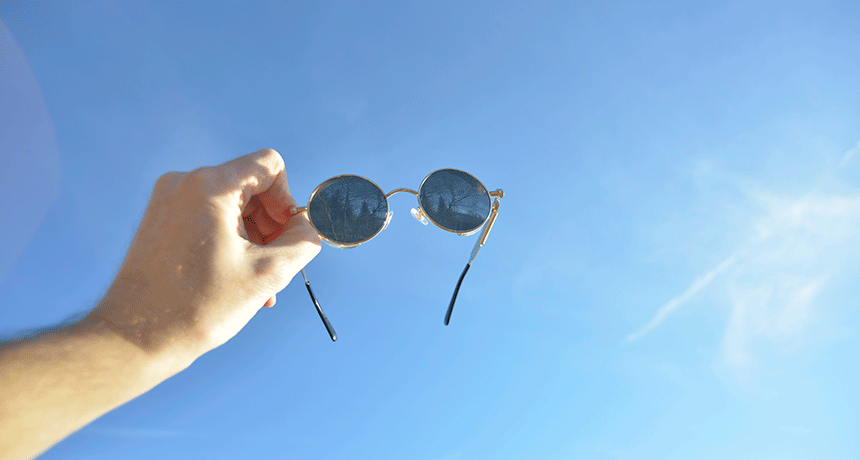
Photochromic chemicals change shape when exposed to a specific wavelength of light. The shape change changes the chemical’s color.
- Brain
Tongues ‘taste’ water by sensing sour
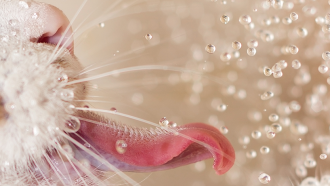
Water doesn’t taste like much, but our tongues need to detect it somehow. They may do it by sensing acid, a new study shows.
- Brain
Scientists Say: Amygdala
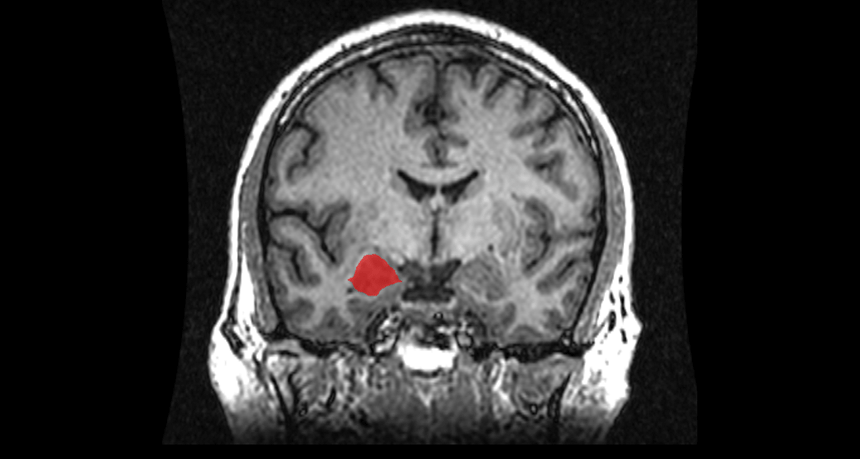
Named after the Greek word for “almond,” the amygdala helps us process emotions, make decisions and form memories.
- Brain
Brains learning together act the same
When students are all focused on the same thing, their brainwaves look the same, a new study shows.
- Chemistry
Scientists Say: Catalyst
Sometimes a chemical reaction can take a while. If speed is needed, a catalyst can help.
- Health & Medicine
Scientists Say: Acoustic
Acoustic is an adjective used to describe something involving sound. It’s also a noun that refers to the branch of physics that studies sound.
- Animals
Scientists Say: Extremophile
Some species can survive high heat, freezing cold or other extreme environments. Scientists call these organisms extremophiles.