Matter and Its Interactions
- Chemistry
Experiment: Test the effect of temperature on reaction time
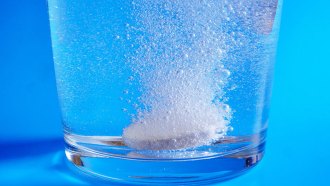
Alka-Seltzer tablets fizzle furiously when dropped into water. Can you make Alka-Seltzer fizz faster or more loudly by changing the water’s temperature?
- Materials Science
Analyze This: A new fabric mimics polar bears’ pelts for warmth
With layers that work like polar bears’ skin and fur, a material absorbs light and keeps it from escaping.
- Physics
Scientists Say: Explosion
Explosions happen when chemical or nuclear reactions blow out a lot of heat, noise and expanding gas.
- Tech
Nanocrystal ‘painted’ films may someday help relieve summer heat
The rainbow palette and cooling powers of new plant-based films comes from their microscopic surface patterns of tiny crystals.
- Chemistry
Experiment: Keep your candy cool with the power of evaporation!
In this science project, use the energy produced when water evaporates to cool down chocolate-covered candy so it doesn't melt.
- Chemistry
Scientists Say: PFAS
Non-stick coatings, stain-resistant cloth and other common materials leach long-lived PFAS into soil and water.
- Earth
Rare earths’ hidden electrons make much of modern tech possible
Because of their unique chemistry, rare-earth elements can generate powerful magnetic fields and fine-tune light for a wide range of applications.
- Environment
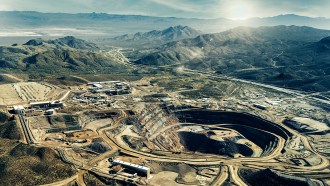
Rare-earth mining is dirty but key to a climate-friendlier future
That’s spurring new research to find a steady but safer supply of these precious metals, including in the United States.
- Tech
A new solar-powered gel purifies water in a flash
The unusual, fruit-inspired structure of this material provides quick filtration that could satisfy people's daily water needs.
- Animals
These beetles ‘drink’ water using their butts
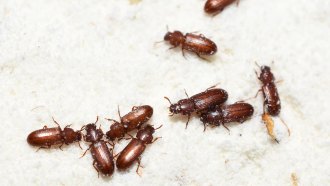
Red flour beetles can survive in very dry environments. New research shows how the beetles can suck water from the air using their rear ends.
- Tech
Magnetic fields melt and re-form new shape-shifting devices
Miniature machines made of gallium and magnetic particles can switch from solid to liquid and back.
- Chemistry
Chemists have unlocked the secrets of long-lasting Roman concrete
By searching ancient texts and ruins, scientists found a concrete recipe that could make buildings stronger — and help address climate change.