Matter and Its Interactions
- Environment
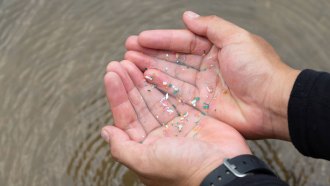
Sea life may suffer as plastic bits alter metals in water
This interplay between plastics and metals could affect how each affects the environment — and suggests opportunities for controlling their risks.
- Animals
Let’s learn about frogs
Frogs are a fascinating bunch of amphibians. Unfortunately, they’re also dying off in huge numbers.
- Tech
Think of this new tech as sunglasses for our windows
Keeping buildings cool can use a lot of energy. Thanks to quantum computing, engineers designed a coating to cut the warming light that enters windows.
- Archaeology
Minding your mummies: The science of mummification
In this science project, you will learn about the rituals and science of mummification by mummifying a hot dog.
- Climate
Creating less new stuff could greatly help Earth’s climate
Instead of throwing unneeded things away, scientists recommend moving to a cycle of reducing, reusing, repairing and remaking old things into new ones.
- Materials Science
Let’s learn about piezoelectric materials
Piezoelectric materials turn mechanical energy into electrical energy — and vice versa.
- Science & Society
How daylight saving time throws off your internal clock
Turning the clock ahead knocks our bodies and brains out of sync with the sun. That leads to many potential health issues.
- Physics
In a breakthrough experiment, fusion gave off more energy than it used
The sun creates energy through nuclear fusion. Now scientists have too. This achievement raises hopes for developing a new type of clean energy.
- Materials Science
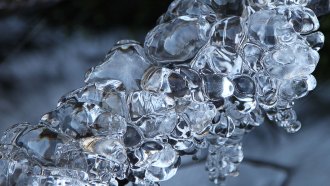
Let’s learn about the weird science of ice
Better understanding of ice could lead to new deicing materials or even, someday, weather control.
- Physics
Does the size of a parachute matter?
How does a parachute work? Do bigger parachutes work better than smaller parachutes? Find out in this science project whether the size of the parachute matters.
- Materials Science
Scientists Say: Hydrogel
Tangled polymer chains help hydrogels hold their shape despite being full of water.
- Environment
Gas stoves can spew lots of pollution, even when they’re turned off
A new study finds they can leak benzene and other harmful chemicals into homes, sometimes at very high levels.