MS-ESS1-2
Develop and use a model to describe the role of gravity in the motions within galaxies and the solar system.
- Planets
In a first, telescopes have caught a star eating a planet
A burst of light and a cloud of dust are signs that a distant star swallowed a giant planet.
- Physics
Explainer: Reflection, refraction and the power of lenses
The inner workings of microscopes, telescopes, eyeglasses and other lens-based devices rely on two important laws of optics.
- Space
Here’s why the moon must get its own time zone
But should moon time be like Earth time — or quite different? At issue: The moon’s lesser gravity will make seconds there tick faster than on Earth.
- Earth
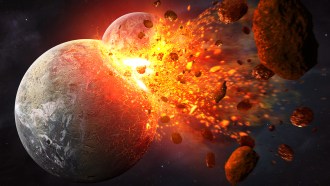
One collision could have formed the moon and started plate tectonics
A hypothetical planet slamming into Earth 4.5 billion years ago might have set subduction into motion.
- Tech
A new solar-powered gel purifies water in a flash
The unusual, fruit-inspired structure of this material provides quick filtration that could satisfy people's daily water needs.
- Space
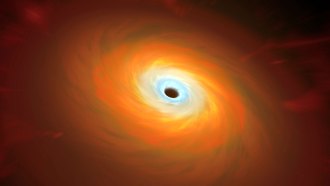
Scientists Say: Accretion Disk
Cosmic swirls of gas, dust and plasma, accretion disks reveal the shadowy silhouettes of black holes and more.
- Space
NASA is readying to send humans back to the moon
The launch of NASA's Artemis I is a huge step toward sending humans back to the moon and beyond.
- Space
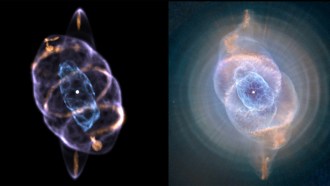
Jets may have sculpted rings of Cat’s Eye nebula
The Cat’s Eye nebula is one of the most complex of its kind. A 3-D model now reveals the source of that complexity.
- Physics
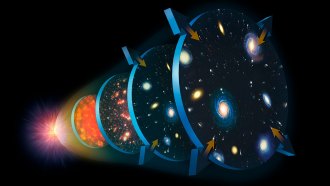
Mysteries about the universe abound, from its beginning to its end
Scientists have a good understanding of the laws that make our universe tick. But they still don’t quite know how it began — or will end.
- Space
NASA’s DART spacecraft successfully bumped an asteroid onto a new path
The spacecraft’s intentional crash into an asteroid changed the space rock’s orbit by more than 30 minutes — far more than expected.
- Space
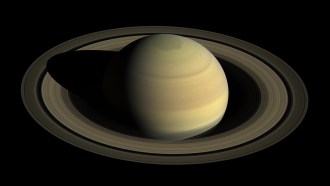
A missing moon could have given Saturn its rings — and tilt
The hypothetical moon is being called Chrysalis. It could have helped tip the planet over before getting shredded to form Saturn’s rings.
- Tech
NASA’s DART spacecraft crashed into an asteroid — on purpose
This mission could provide a blueprint for how to deflect a killer asteroid, if one is ever found headed for Earth.