Animals
- Animals
Cool Jobs: Pet science
Pets make great subjects for research. These scientists work to make our animals — and us — healthier and happier.
- Animals
Parasites give brine shrimp super powers
When infected with parasitic worms, brine shrimp survive better in waters laced with toxic arsenic, a new study finds.
- Animals
Picking a better porch light
Lights can vary in brightness and ‘color’ — even those that are sold as white. A new study tested which lights attracted the most bugs.
- Animals
Roadkill : Learning from the dead
Roadkill can be more than a smooshed-up carcass. Scientists study these highway casualties to learn more about wildlife and their environments.
- Animals
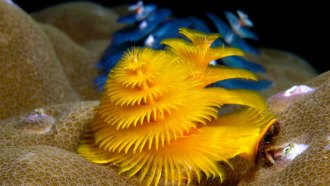
Picture This: Christmas tree worms
The tops of Christmas tree worms look like brightly colored plants. But they are really boneless marine animals with eyes that can breathe and gills that can see.
- Animals
Picture This: Plesiosaurs swam like penguins
A computer model suggests plesiosaurs — ancient marine reptiles — swam like penguins, using front flippers for power and back flippers for steering.
- Animals
Bugs that call your house home
A survey of North Carolina homes found hundreds of species of insects, arachnids and other arthropods. Most, though, were harmless.
- Animals
Why some penguin feathers never freeze
Oil and tiny pores prevent the feathers on some penguins from freezing. The discovery could inspire new ways to keep ice off of airplane wings.
- Animals
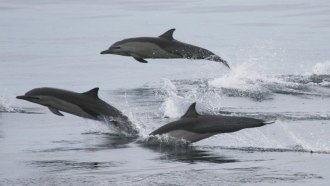
Using dolphins to find unknown ocean pollutants
Long-lasting pollutants may threaten marine mammals and human health. To find those pollutants, scientists are sampling blubber, then running the fatty material through new types of tests.
- Animals
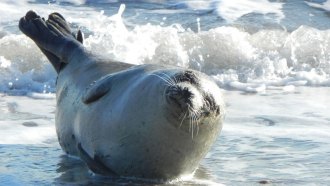
Seals: Catching a ‘corkscrew’ killer
Spiral wounds on dead seals led experts to blame boat propellers. But cameras exposed another source: One seal species was killing another.
- Animals
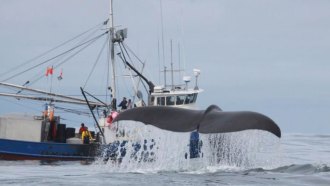
What a drag! Fishing gear’s effects on whales
Many whales become entangled in the gear that fishing boats use to catch fish and shellfish. Such debris can have dire impacts on the big mammals.
- Animals
Faking out whales
A false “dinner bell” can safely distract hungry whales from stealing fish from commercial fishing lines, new research shows.