Earth
- Climate
Let’s learn about lightning
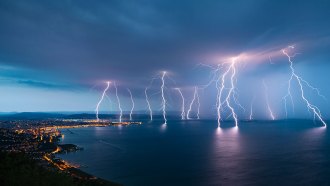
Around 100 times a second, every hour of every day, lightning strikes somewhere on Earth. It’s beautiful — and deadly.
- Environment
Pond scum can release a paralyzing pollutant into the air
New study finds blooms of blue-green algae can seed the air with a poisonous pollutant.
- Animals
A common antibiotic might save some sick corals
The antibiotic amoxicillin stopped tissue death in corals for at least 11 months after treatment.
- Environment
Warning: Wildfires might make you itch
Western wildfires are on the rise due to climate change and land use. Now a study adds eczema to the list of health risks that smoke might trigger.
- Climate
Climate may have sent drift of the North Pole toward Greenland
This mid-1990s shift in the pole’s movement was driven by glacial melt. And that was triggered in part by climate change, a new study reports.
- Animals
Only 3 percent of Earth’s land is unchanged by people
A sweeping survey of land-based ecosystems finds that very few still support all the animals they used to. Reintroducing lost species could help.
- Agriculture
New technologies might help keep drought-prone farms green
After learning how much damage drought can do to crops, two teens designed ways to detect a thirsty plant and make sure it gets enough water.
- Climate
Local glacier could be gone in a decade, young scientist finds
A teen calculated the volume of a glacier by drilling into it with jets of steam — then used that to estimate how long before all its ice will be gone.
- Earth
Here’s how lightning may help clean the air
Airplane observations show that storm clouds can generate huge quantities of air-cleansing chemicals known as oxidants.
- Climate
Urchin takeover underlies California’s vanishing kelp forests
Some 95 percent of kelp forests along its northern coast are gone. Meanwhile, sea otters are helping slow the loss of surviving kelp farther south.
- Chemistry
New recycling technologies could keep more plastic out of landfills
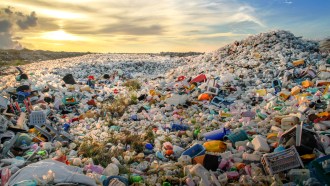
Recycling plastics is really hard — especially into useful materials. But new chemical tricks could make recycling easier.
- Microbes
Several plant-like algae can morph into animal-like predators
Single-celled green algae swim through water as free cells. Most use only photosynthesis for their energy. But not all of them, a new study shows.