Health & Medicine
- Health & Medicine
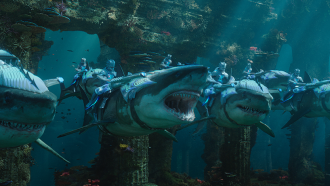
What makes Aquaman special? He can take a lot of pressure
The new Aquaman movie makes life under the sea look pretty glamorous. In fact, we puny humans probably couldn’t take the pressure.
- Health & Medicine
Keeping an irregular schedule may change how many calories you burn
Our daily cycle of calorie burning is one of many body processes that follow a biological clock.
- Health & Medicine
Silver nanoparticles help fight brain-eating amoebas
Nanotechnology may be — quite literally — a silver bullet for these microscopic monsters.
- Health & Medicine
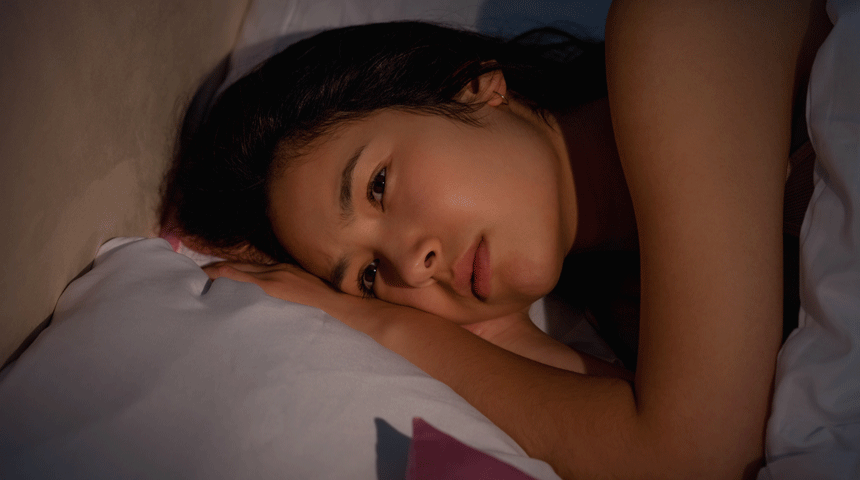
Sleepless nights can leave brains feeling anxious
Pulling an all-nighter boosts anxiety levels — and changes brain activity — the next morning, a new study finds.
- Brain
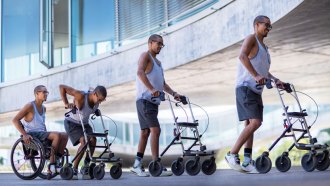
Zaps to spinal cord help paralyzed people walk
Sending electrical pulses to the spinal cord can help paralyzed people learn to walk again, new tests show.
- Brain
Young people’s memory improves after stopping marijuana use
Paying teens and young adults to stop using marijuana improved their memory within one week. The results hint that some impairments from pot may be reversible — at least for a time.
- Brain
People may be literally led by their noses
The brain links people’s senses of nagivation and smell, according to a new study.
- Health & Medicine
Why can’t bugs be grub?
Insects are tasty and nutritious, and raising them is good for the planet. So how can Westerners be convinced to give insects a taste?
- Brain
The immune system has a say in how hard ‘teen’ rats play
“Teen” rats like to wrestle. A new study shows the brain’s immune system might trigger changes that morph this desire for rough-and-tumble play into the calm of adulthood.
- Health & Medicine
Many food supplements unlawfully contain drugs
The most common medicines tainting these products were usually ones that doctors prescribe for weight loss, for muscle building or to boost a man’s sex drive.
- Health & Medicine
Scientists Say: Quarantine
This is a restriction on where people or animals who are sick — or suspected of being sick — can go. Doctors use quarantine to try to prevent a disease from spreading.
- Brain
Less screentime linked to better memory, learning in kids
Kids ages eight to 11 spend an average of 3.6 hours a day on screens, a new study shows. But the best thinking scores come from kids who average fewer than two hours a day of screen time.