Health & Medicine
- Chemistry
Scientists Say: Amino Acid
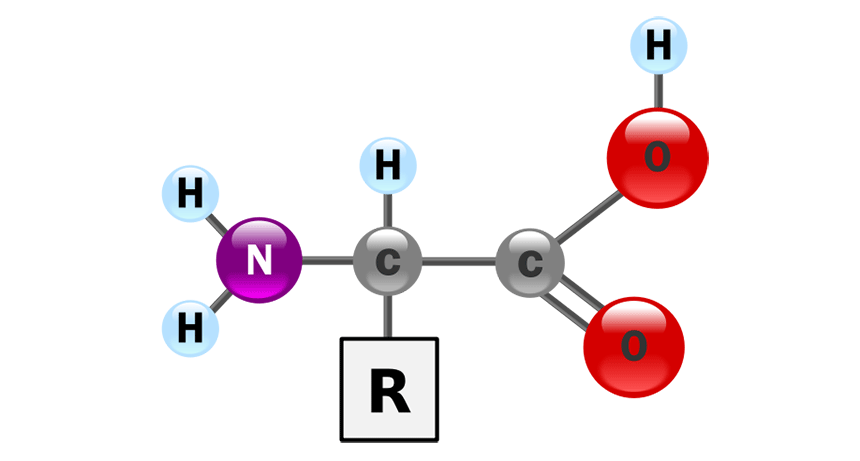
Amino acids are small molecules that make up proteins and serve as messengers in our cells.
- Health & Medicine
Scientists Say: Vestigial
This adjective is used to describe something — like a body part or organ — that doesn’t have a function. Often it is smaller or less developed than the functional version in another species.
- Chemistry
Touching receipts can lead to lengthy pollutant exposures
The chemical BPA, which coats some cash-register receipts, may linger in the body for far longer than if someone had ingested it.
- Chemistry
Explainer: Store receipts and BPA
The chemical BPA may become trapped in the skin, causing it to linger in the body for a week or more after touching receipt paper.
- Health & Medicine
For teens, a good mood depends on good sleep
Teens need eight to 10 hours of sleep at night to feel good and function well the next day, a new data show.
- Health & Medicine
Student invents 3-in-1 hygiene powder
A teen who volunteers at a homeless center has developed a powdery product that can serve as dry shampoo, body powder and toothpaste.
- Health & Medicine
Vaping may stiffen the heart and blood vessels
Exposure to e-cigarette vapors damages blood vessels in mice, suggesting that vaping could put people at risk for heart disease.
- Health & Medicine
Analyze This: Does moderate screen time boost teen happiness?
Computers, smartphones and TVs are everywhere. And scientists are trying to discover whether that’s a good thing for our well-being.
- Brain
A cell hookup helps the tongue tell sweet from sour
To keep your sense of taste, new taste cells need to hook up to your brain every few weeks. Now, scientists have figured out how they do it.
- Genetics
Explainer: Why scientists sometimes ‘knock out’ genes
How do we learn what a particular molecule does in the body? To find out, scientists often 'knock out' the gene that makes it. Here’s how.
- Brain
Scientists Say: Rabies
Rabies is a disease caused by the rabies virus. There is a vaccine, but without it, people and animals can die from this disease.
- Health & Medicine
Bones have stealth role in muscle, appetite and health
Surprise! Bones release hormones that carry on long-distance chats with the brain and other organs. Studies in mice show these conversations can affect appetite, how the brain uses energy and more.