Space
- Space
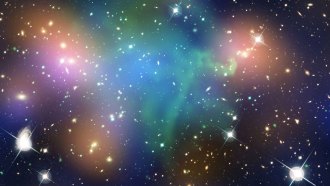
Our feverish universe is getting hotter every day
For the first time, astronomers have taken the temperature of the cosmos at different times in its history. Galaxy clusters are cranking up the heat.
- Planets
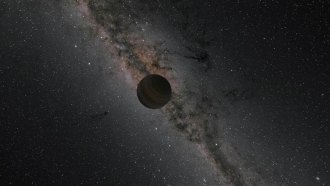
Rogue planets wander the galaxy all alone
Some planets don’t orbit stars. They were kicked into space long ago. The newest, smallest one found is only about as massive as Earth.
- Math
Meet ‘Pi’ — a new Earth-sized planet
Searching through data from NASA’s K2 Mission, researchers found a new planet. Some call it K2-315b, others smile and refer to it as “Pi Earth.”
- Space
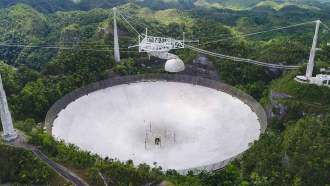
Star of science and movies, the Arecibo radio telescope is dead
Broken cables led to catastrophic damage of its history-making dish. The U.S. National Science Foundation will now dismantle what remains.
- Space
Why Arecibo’s loss is such a big deal for astronomy
Damage to the radio telescope in Puerto Rico has robbed scientists of a special tool for studying everything from asteroids to galaxies.
- Planets
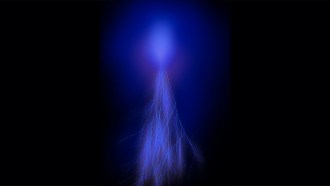
Jupiter may have ‘sprites’ or ‘elves’ in its atmosphere
This is the first time that scientists have seen hints of these weird side effects of lightning storms somewhere other than on Earth.
- Planets
There’s water on sunny parts of the moon, scientists confirm
The new observations were made by a telescope on board a jet in Earth’s atmosphere. They confirm the presence of water on sunlit areas of the moon.
- Planets
Let’s learn about Mars
Traveling to Mars offers many challenges, including life without gravity, cosmic rays and communication delays.
- Brain
Scientists Say: Nucleus
Nucleus comes from the Latin term “nuc,” meaning nut or kernel. In science there are lots of nuclei. Every one of them is the center of something.
- Materials Science
Analyze This: Insect shells could help builders on Mars
When mixed with rocky soil, a compound called chitin makes a strong material. It could be pulled from the shells of insects used for food.
- Health & Medicine
Surviving Mars missions will take planning and lots of innovation
Astronauts that go to Mars will need protection from microgravity and radiation, plus mini-medical devices to diagnose problems and manage emergencies.
- Physics
Scientists Say: Gravity
Gravity is a fundamental force that attracts objects with mass to other objects with mass. It decreases with distance.