Matter and Its Interactions
- Environment
Here’s one way to harvest water right out of the air
Need water but you have no access to rain, lakes or groundwater? Materials known as metal-organic frameworks could be used to slurp that water from the air, new data show.
- Chemistry
Batteries should not burst into flames
Because lithium-ion batteries power modern life, they need to store a lot of energy. Now scientists are focusing on making them safer.
- Health & Medicine
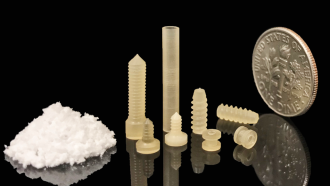
Silk can be molded into strong medical implants
Freeze-dried and powdered silk has a long shelf life. It also is cheap to ship and can be molded into sturdy medical implants.
- Animals
Try This: Walking on water with science
Water striders walk on water. How do they do it? They spread out. This experiment will show you how it works.
- Chemistry
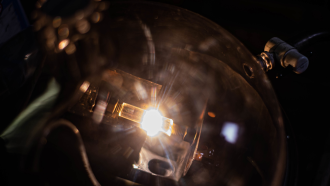
Converting trash to valuable graphene in a flash
Flash heating of carbon-rich wastes creates graphene, which has many commercial uses.
- Space
Black hole mega-burp was truly explosive
Long, long ago, in a galaxy far, far away, a black hole blasted out 100 billion times as much energy as our sun ever will. One word for that: Wow!
- Chemistry
Explainer: What the pH scale tells us
The pH scale tells us how basic or acidic something is. Pure water sits in the middle of the scale, at a pH of seven.
- Climate
Study appears to rule out volcanic burps as causing dino die-offs
New data on when massive volcanic eruptions happened do not match when the dinosaur mass extinction took place.
- Physics
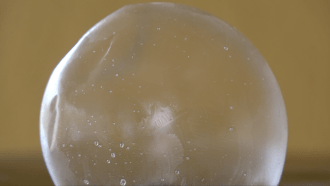
How to temporarily ‘fossilize’ a soap bubble
Here’s how to freeze a soap bubble in midair. Warning: The environment needs to be frosty, and even then it can take a certain amount of trial and error.
- Materials Science
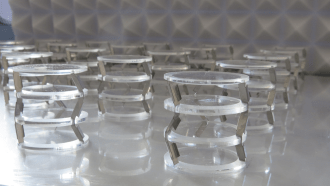
New twist can hush — even cloak — some sounds
Swiss engineers developed clear, spiral structures to make a new sound-dampening system. Those twists block some vibrations and lets others through.
- Chemistry
Help for a world drowning in microplastics
Microplastic pollution in our oceans and lakes is a problem. Scientists are testing solutions — from more biodegradable recipes to nanotechnology.
- Materials Science
Here’s how to hide some objects from heat-sensing cameras
A special coating that conceals temperature information from heat-detecting cameras might someday be used as a privacy shield.