MS-LS2-1
Analyze and interpret data to provide evidence for the effects of resource availability on organisms and populations of organisms in an ecosystem.
-
- Animals
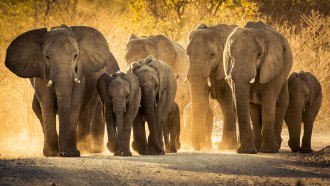
Let’s learn about elephants
Check out five wild facts you may not know about a familiar animal: the elephant.
- Ecosystems
Cheatgrass thrives on the well-lit urban night scene
Middle-grade campers team up with ecologists at Denver University to show that streetlights boost the growth of a reviled invasive species.
- Animals
Spiders can take down and feast on surprisingly big snakes
Snared in sticky webs and subdued by poison, even venomous snakes can become a spider’s soup.
- Animals
Sudden shark die-off 19 million years ago eliminated most species
New fossil evidence shows 90 percent of sharks died in the mysterious event.
- Climate
Urchin takeover underlies California’s vanishing kelp forests
Some 95 percent of kelp forests along its northern coast are gone. Meanwhile, sea otters are helping slow the loss of surviving kelp farther south.
- Microbes
Several plant-like algae can morph into animal-like predators
Single-celled green algae swim through water as free cells. Most use only photosynthesis for their energy. But not all of them, a new study shows.
- Animals
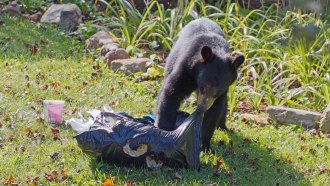
Changing people’s behavior can make bear life better
Black bears don’t always live life on the wild side. More and more, they live near people. Here’s how people and bears can get along.
- Health & Medicine
Some microbial hitchhikers may weaken body’s attack on COVID-19
New research identifies an altered mix of microbes in the body — ones commonly seen in people with poor diets — that may worsen coronavirus disease.
- Agriculture
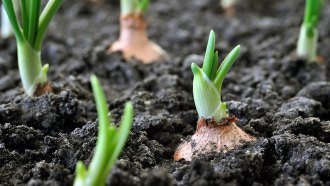
Healthy soils are life-giving black gold
Scientists explain why everyone needs to value the soils beneath our feet — and why we should not view them as dirt.
- Ecosystems
Can people protect as much space as nature needs?
To save biodiversity, nations are drafting a plan to protect 30 percent of Earth by 2030. Up for debate is how best to do that.
- Agriculture
How to grow your own science experiment
Does fertilizer help plants grow better? You might expect it to, but how can you know? This experiment will help you test it yourself.