MS-LS2-1
Analyze and interpret data to provide evidence for the effects of resource availability on organisms and populations of organisms in an ecosystem.
- Ecosystems
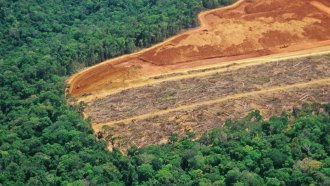
Can people protect as much space as nature needs?
To save biodiversity, nations are drafting a plan to protect 30 percent of Earth by 2030. Up for debate is how best to do that.
- Agriculture
How to grow your own science experiment
Does fertilizer help plants grow better? You might expect it to, but how can you know? This experiment will help you test it yourself.
- Ecosystems
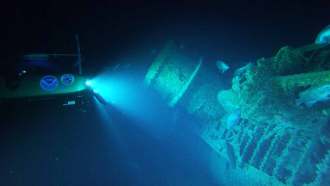
Analyze This: Shipwrecks provide a home for bottom-dwelling fish
Fish have found a habitat in a submarine and freighter that sunk to the seafloor during World War II.
- Animals
Whales get a second life as deep-sea buffets
When a whale dies and sinks to the seafloor, it becomes a feast for hundreds of different types of creatures.
-
A dirty and growing problem: Too few toilets
As the famous book says, everybody poops. That’s 7.8 billion people, worldwide. For the 2.4 billion with no toilet, the process can be complicated.
- Animals
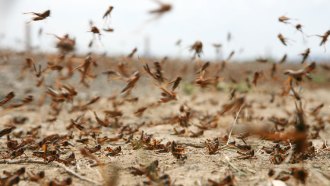
A single chemical may draw lonely locusts into a hungry swarm
Swarms of locusts can destroy crops. Scientists have discovered a chemical that might make locusts come together in huge hungry swarms.
- Life
For teens, big problems may lead to meaningful research
Several teens who competed at the Regeneron Science Talent Search applied their STEM know-how to solve problems they or their communities faced.
- Animals
What you need to know about ‘murder hornets’
Two new specimens of the world’s largest hornet have just turned up in the United States. Here’s what to make of them and other alien-hornet invaders.
- Animals
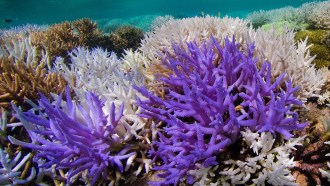
Going bright may help corals recover from bleaching
When some corals bleach, they turn neon colors. Flashy hues may be part of a response that helps these corals recover and reunite with their algae.
- Animals
When prey get scarce, these jellies become cannibals
Invasive comb jellies may feast on their larvae if massive population booms in summer deplete their prey.
- Science & Society
Science isn’t just for scientists
It doesn’t take an advanced degree or a lab to do science. All you need is curiosity and an interest in learning something new every day.
- Health & Medicine
The many challenges of corralling a coronavirus outbreak
The Chinese government has quarantined millions of people in hopes of limiting spread of a new coronavirus. But no one yet knows how much this will help.