Space
- Physics
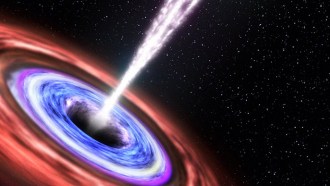
Escape from a lab-built black hole
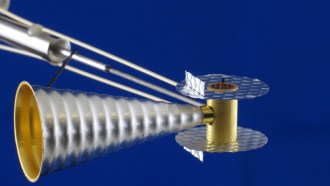
In the 1970s, physicist Stephen Hawking suggested that some particles could escape a black hole. An experiment now shows how, using a lab-made black hole ‘made’ from sound.
- Chemistry
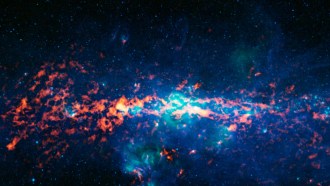
Space cloud may hold clue to life’s origins
Scientists probing a cloud of dust and gas some 26,000 light-years away found a chemical with a structure resembling molecules critical for all life on Earth.
- Planets
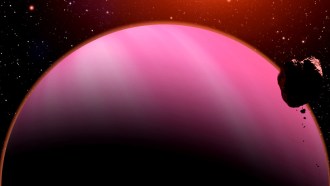
Distant world hosts water
One measure of an extraterrestrial world’s potential for supporting life is the presence of water. The Neptune-size HAT-P-11b fits that criterion.
- Planets
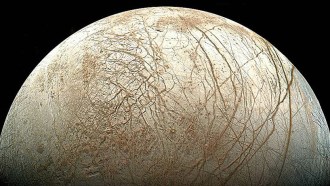
This moon’s surface slides, just like Earth’s
Europa is one of Jupiter’s giant, icy moons. Scientists say it has plate tectonics, which means its surface is covered by moving, giant slabs.
- Planets
Asteroids: A stepping stone to Mars?
NASA's Asteroid Redirect Mission, designed to capture and move an asteroid, may be a step toward getting to Mars. But not everyone agrees it's the right step.
- Planets
Asteroids: Avoiding an Earthly smashup
Any of nearly 1,500 asteroids could hit Earth. Experts want to learn more about the space rocks — and maybe even bump them off course.
- Planets
Explainer: What are asteroids?
Leftovers from the creation of the solar system, asteroids are space rocks that orbit the sun. Let’s hope the big ones never become meteorites.
- Earth
Meteorites likely wiped out Earth’s earliest life
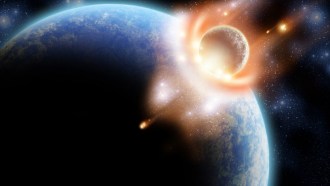
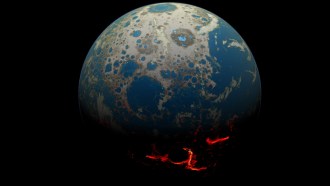
Enormous meteorites appear to have slammed into Earth several times early in its history. Each mega-smashup would have boiled off oceans and obliterated any bit of life.
- Physics
Smooshed diamonds: A window into exoplanets?
Scientists have compressed diamonds more than ever before. Their carbon may give clues to what conditions might be like deep within planets way beyond our solar system.
- Space
What to wear on Mars
NASA released details of the new, more flexible apparel being designed for long-distance travelers — such as those bound for another planet.
- Space
Monster collision in space
The smashup of four clusters of galaxies has sent a super-hot jet of charged particles spewing 2.5 million light-years into space!
- Planets
First mega-Earth found
Astronomers are puzzled by Kepler-10c. This exoplanet is rocky like Earth — but as massive as Neptune. And that challenges their accepted ideas about how planets form.