Environment
- Earth
People are changing which parts of Earth get more (or less) water
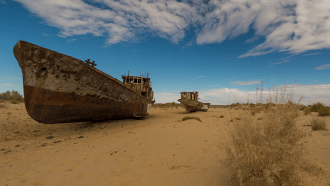
Human activities have been reshaping the planet’s water map. Some changes created new lakes. Others caused lakes to disappear.
- Chemistry
‘Thirdhand’ smoke can hitchhike to non-smoking sites
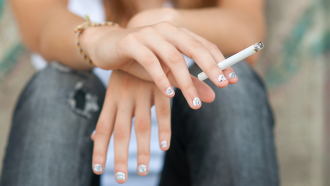
Harmful “thirdhand” smoke — the type that attaches to surfaces — can hitch a ride on airborne particles or clothes and travel into non-smoking buildings.
- Earth
Scientist tackles water pollution with epic swims
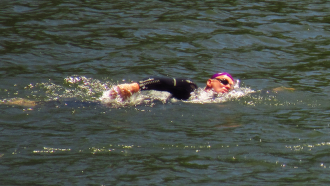
German chemist Andreas Fath swam the entire Tennessee River — in record time. The reason was not to win a place in the Guinness Book of Records. He wanted to raise awareness about water pollution.
- Animals
Explainer: DNA hunters
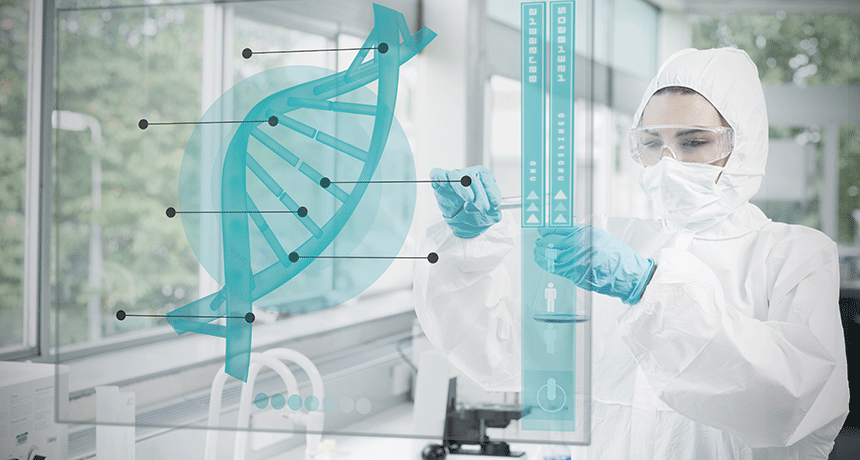
Snippets of DNA can be left behind by a passing organism. Some researchers now act as wildlife detectives to identify the sources of such cast-off DNA.
- Climate
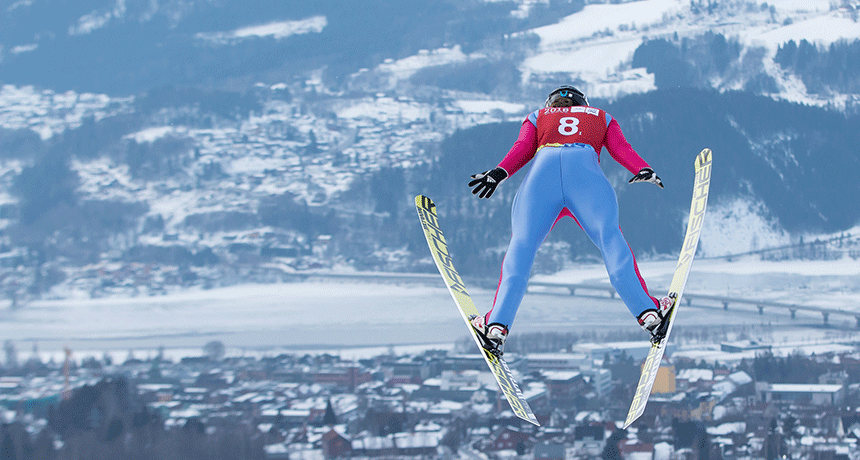
Climate change threatens future Winter Olympics
Higher temperatures, less snow mean many former Winter Olympics sites soon will no longer qualify to host future games, concludes a new analysis.
- Ecosystems
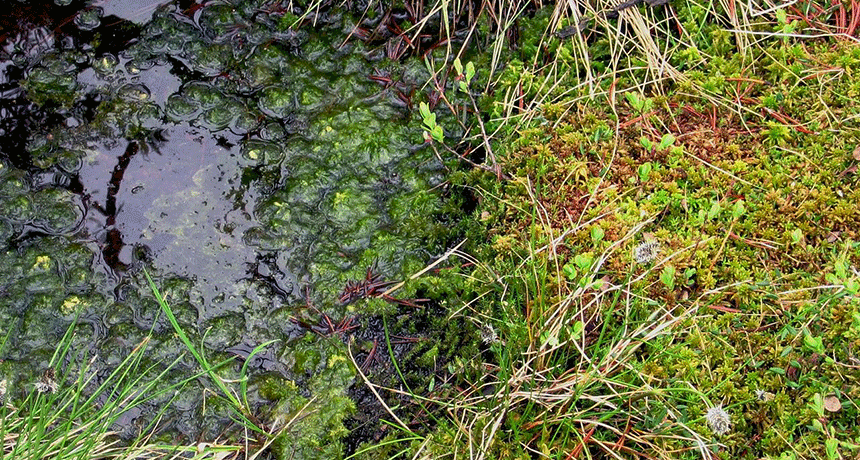
Scientists Say: Bog
Bogs are a type of wetland in which partially decayed plants sink down and form peat.
- Climate
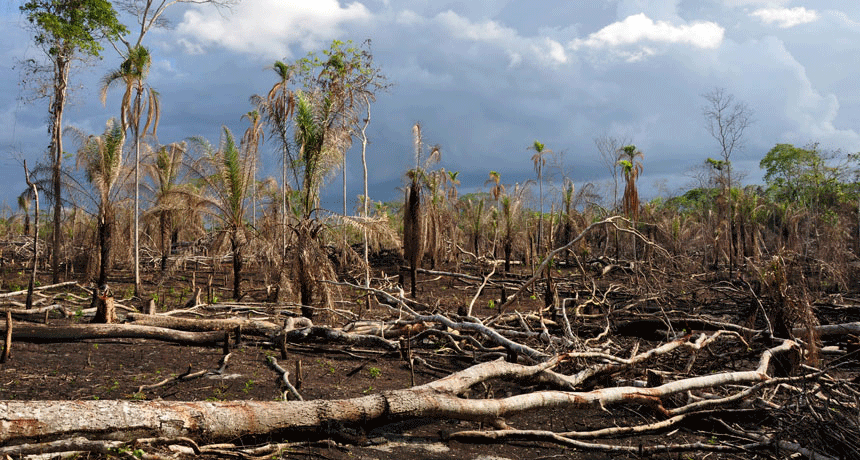
Tropics may now emit more carbon dioxide than they absorb
Analyses of satellite images suggest that degraded forests now release more carbon than they store.
- Animals
Night lights have a dark side
Artificial light at night not only affects our view of the night sky, but also has the ability to impair animal behaviors — and probably our health.
- Climate
Hunting the mysterious source of a global illness
Doctors and scientists around the world are scouring the environment for the elusive cause of Kawasaki disease, a harmful childhood illness.
- Environment
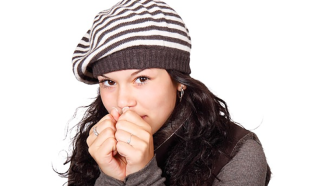
Is your home chilly? This might just be healthy
Feeling mildly cold (or a bit too warm) forces the body to adjust what it’s doing to maintain a healthy temperature. And that can do a body good, data now show.
- Environment
Maybe ‘shade balls’ should not be balls
So-called shade balls have a range of uses in water reservoirs, from cutting evaporation to reducing the growth of algae. But the best performers might not actually be balls, a Florida teen now shows.
- Environment
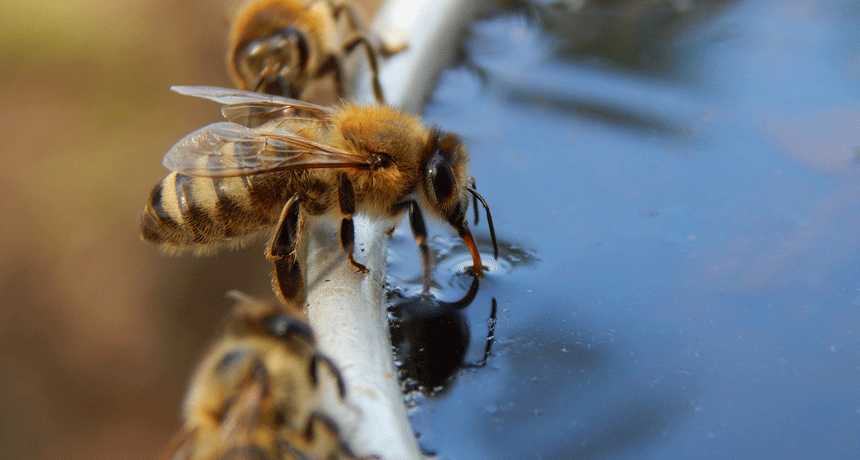
Cleaning up water that bees like to drink
Plant roots suck up pesticides used on soils, then release them into water that can seep from their leaves. This is a sweetened water that bees love to sip. A teen figured out how to remove most of the pesticide with bits of charcoal.