Genetics
- Agriculture
The first farmers were two groups, not one
The humans that began farming 10,000 years ago in the Fertile Crescent may have been two cultures living side-by-side.
- Animals
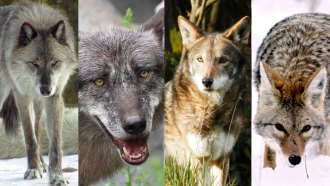
Wolf species shake-up
A genetic study says red wolves and eastern wolves may really be mixtures of coyotes and gray wolves, not distinct species.
- Genetics
How fake sugar can lead to overeating
Scientists have found that fruit flies and mice eat more after consuming food laced with a popular fake sugar.
- Earth
Something in plastics may be weakening kids’ teeth
The body can confuse some pollutants for a natural hormone. Researchers in France now find such pollutant exposures in childhood may lead cells to make defective tooth enamel.
- Genetics
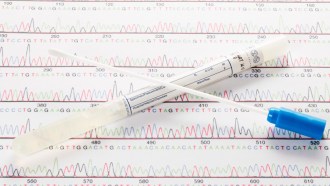
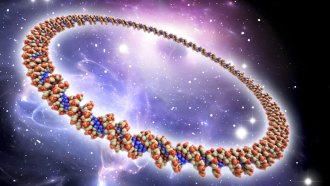
Scientists Say: DNA sequencing
All of us have our own individual DNA. Now, scientists can determine what each individual strand is made of — a process called DNA sequencing.
- Animals
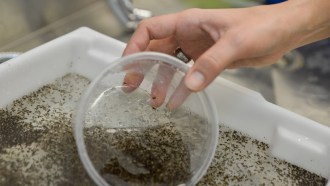
GM mosquitoes cut rate of viral disease in Brazil
Adults males carrying the altered gene cannot father young that survive to adulthood. That’s when they suck blood — and can transmit disease.
- Animals
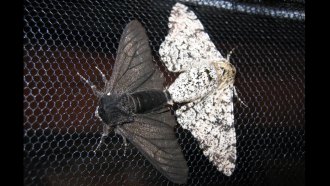
How a moth went to the dark side
Peppered moths and some butterflies are icons of evolution. Now scientists have found a gene responsible for making them so.
- Animals
The turning of wolves into dogs may have occurred twice
The process of turning wolves into dogs, called domestication, may have occurred twice — in the East and the West — ancient DNA suggest.
- Animals
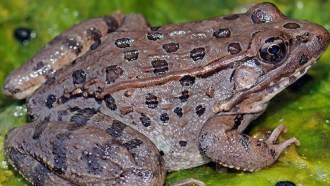
Why some frogs can survive killer fungal disease
A disease is wiping out amphibian species around the globe. New research shows how some frogs develop immunity.
- Genetics
Pacific islanders got a double dose of Stone Age DNA
Unlike other people, certain Pacific Islanders inherited DNA from two ancient human ‘cousins.’
- Genetics
Genes: How few needed for life?
Scientists rebuilt a microbe using its old genes. But not all of them. They used as few building-blocks as they could get away with and still have the life-form survive.
- Genetics
Fattier yeast live long and prosper
Scientists were hoping to build better biofuels. Instead they discovered that fatter yeast cells live longer than lean ones.