Space
- Physics
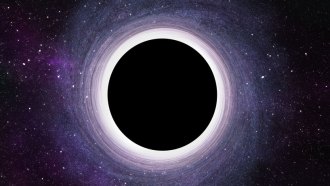
It took a ‘virtual’ telescope to actually picture a black hole
Here’s how scientists connected eight observatories across the world to create one Earth-sized telescope. This is what it took to create an image of a black hole.
- Physics
A short history of black holes
From dreaming up black holes to snapping the first picture of one, the history of black holes has had many twists and turns.
- Space
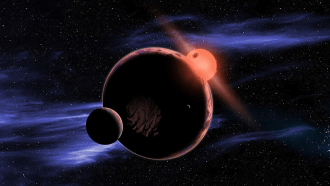
Scientists Say: Red Dwarf
Red dwarfs are the most common kind of star in the Milky Way. They are much smaller and cooler than our own sun.
- Physics
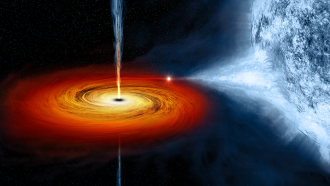
Explainer: What are black holes?
Among the most extreme celestial bodies in the universe, black holes are dense, massive entities whose gravity can sometimes hold together an entire galaxy.
- Math
Exoplanet hunting, HIV-fighting and math garner big prizes for teens
Winners of the 2019 Regeneron Science Talent search hunted exoplanets in new ways, tracked how HIV likes to hide and tackled some candy jar math.
- Physics
On the lookout for micro-missiles from space
Speeding specks of space dust can damage spacecraft. But if they make it to Earth, these tiny rocks can offer lessons on how the solar system formed.
- Space
Caught on camera: A small rock hit the moon
Photographers documented a rocky impact during January’s total lunar eclipse.
- Climate
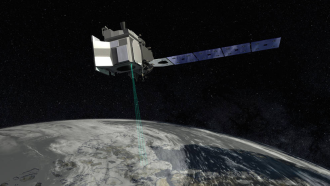
ICESat-2 measures ice and more from space
ICESat-2, launched in September 2018, will detect changes in Earth’s ice sheets and glaciers. It also will monitor our planet’s forests and clear shallow waters.
- Space
There’s a snowman in space
The New Horizons spacecraft snapped pics of the space rock on New Year’s Day.
- Planets
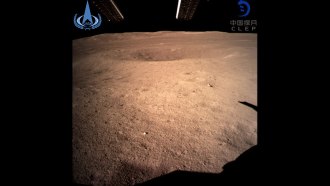
China landed a spacecraft on the far side of the moon
China just brought down a lander and rover on the far side of the moon. Let the science begin!
- Climate
Distant volcano could turn latest lunar eclipse dark red
The recent eruption of Anak Krakatau, an Indonesian volcano, could alter the color of this coming weekend’s lunar eclipse.
- Planets
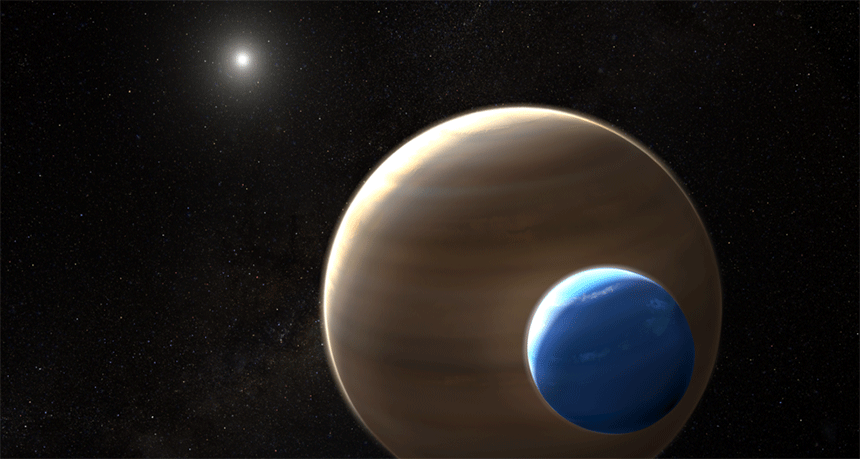
Scientists Say: Exomoon
A moon that orbits a planet in our solar system in a moon. But a moon that orbits a planet outside our solar system? That’s an exomoon.