Brain
- Brain
A cell hookup helps the tongue tell sweet from sour
To keep your sense of taste, new taste cells need to hook up to your brain every few weeks. Now, scientists have figured out how they do it.
- Brain
Scientists Say: Rabies
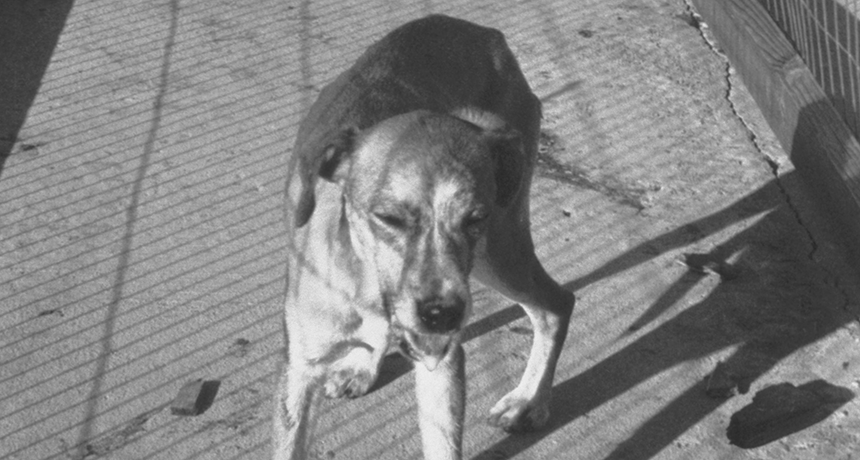
Rabies is a disease caused by the rabies virus. There is a vaccine, but without it, people and animals can die from this disease.
- Brain
Evening screen time can sabotage sleep
Blue light from electronic devices can impair the body’s ability to sleep, making it hard to focus in the morning.
- Brain
Scientists Say: Glia
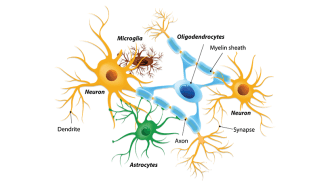
Scientists used to think glial cells did nothing more than glue the brain together. Now we know they do much, much more.
- Brain
Could Zika become a cancer treatment?
The same virus that provoked fear over causing birth defects, last year, may have a beneficial alter ego. Scientists find it may kill cells destined to form deadly brain tumors.
- Brain
Understanding body clocks brings three a Nobel Prize
Three American men will share this year’s Nobel prize for physiology or medicine. The award recognizes their contributions to understanding the workings of the body’s biological clock.
- Brain
Spying on brains in action
New tools let scientists see inside the brain and nervous system as their research subjects move around.
- Brain
Brains may need flexible networks to learn well
New data suggest that brain cells may learn best when they are able to easily make and break off communications with neighbors — or distant brain regions.
- Brain
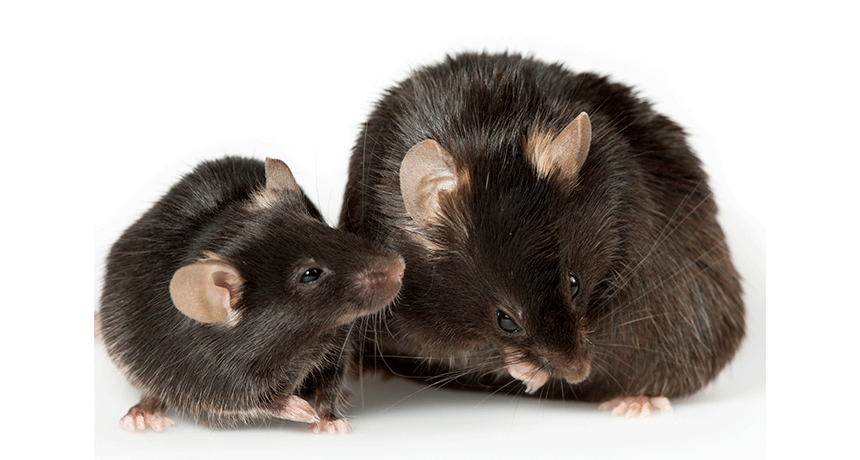
Brain’s immune system can play role in weight gain
Weight isn’t just calories in, calories out. When mice eat a fatty diet, immune cells in their brains become inflamed. That makes the animals gain more weight.
- Brain
Many U.S. football players had brain disease, data show
The brains of more than 200 former football players were donated to science upon their deaths. Signs of severe brain trauma showed up in the vast majority.
- Brain
Mild brain injury can cause bead-like swellings in brain cells
Mild head bumps cause temporary swellings — like beads in a necklace — within brain cells. If cells get enough time to heal, those “beads” will disappear.
- Animals
Night lights have a dark side
Artificial light at night not only affects our view of the night sky, but also has the ability to impair animal behaviors — and probably our health.