Brain
- Brain
Explainer: What are opioids?
Opioid drugs can kill pain, but they can also kill people. Here’s how.
- Brain
Teeny tiny hairs on brain cells could have big jobs
Brain cells have tiny antennae called cilia. But no one really seemed to know what they did. Now, scientists have shown they could play a role in obesity.
- Brain
Scientists Say: Receptor
This molecule is a chemical messenger’s docking station. A receptor serves as a lock for cell activity.
- Brain
Cool Jobs: Decoding how your brain ‘reads’
For some stroke victims and people with dyslexia, reading is nearly impossible. These researchers are working to understand why.
- Brain
En route to Mars, astronauts may face big health risks
Going into space brings the thrill of a new frontier — and risks that scientists are racing to understand, from radiation to isolation.
- Animals
Woodpecker brains host protein linked with human brain damage
Woodpeckers peck with a force great enough to give people concussions. Now a study shows that birds, too, may suffer some brain damage.
- Brain
Unlike adults, teens don’t perform better when the stakes are high
Adults tend to do better on tasks that have bigger rewards. Not teens. This difference might have to do with the rewiring of the brain during adolescence, new data suggest.
- Brain
Ow! These cells might help brains remember pain and fear
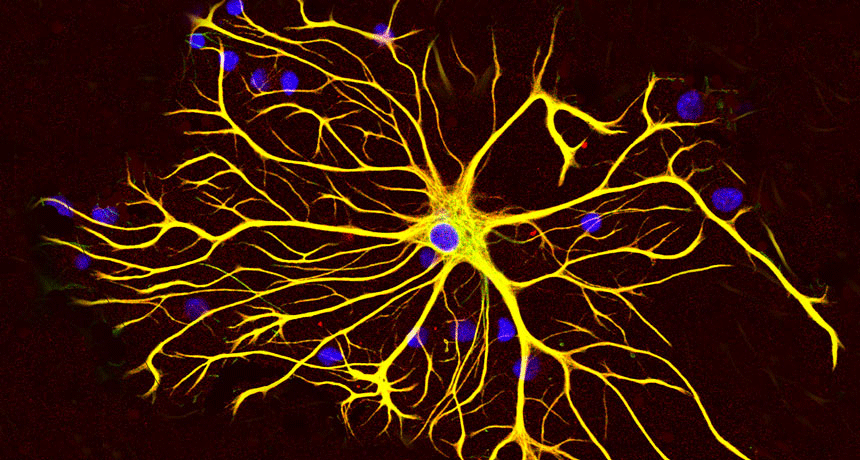
The brain may learn from traumatic experiences with the help of special cells, a new study finds. Scientists used to think these cells, called astrocytes, were just there to support others.
- Brain
Alzheimer’s protein can sneak into the brain from the blood
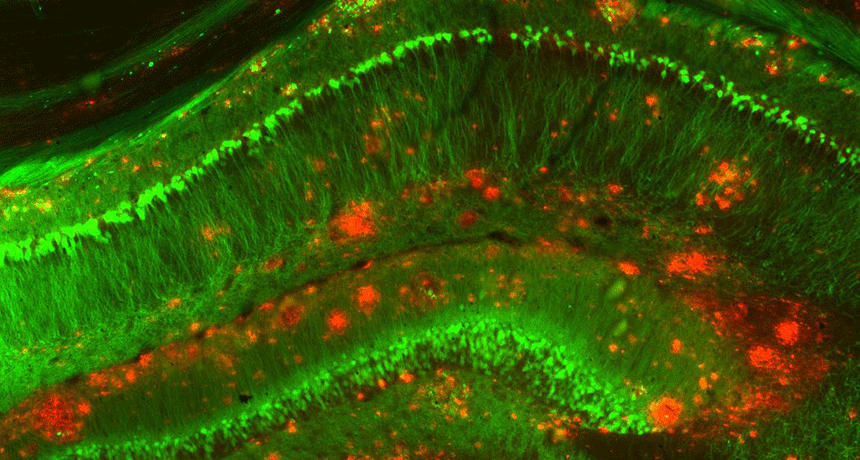
Experiments in mice show that proteins linked with Alzheimer’s disease can enter the brain from the blood, then stockpile there.
- Brain
Trading smartphone time for sleep? Your loss
A new study shows more and more teenagers are hanging out on devices when they should be catching ZZZs, putting their health at risk.
- Brain
Small genetic accident made Zika more dangerous
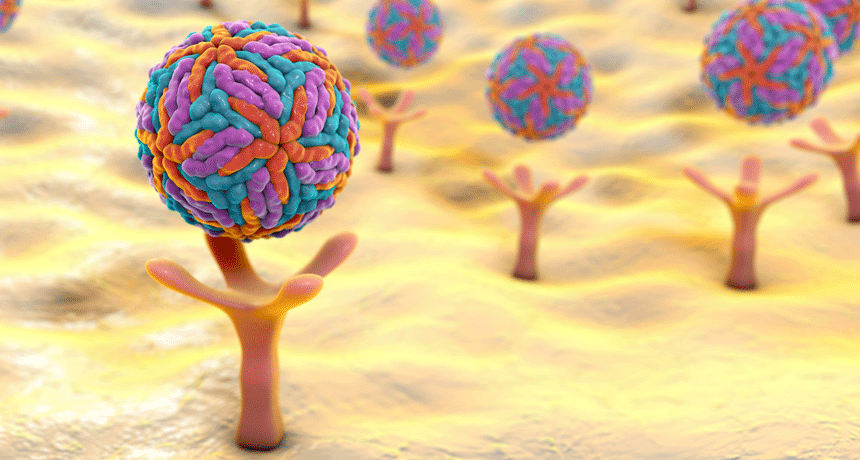
A new study finds that a tiny mutation made the Zika virus more dangerous, by helping it kill cells in the fetal brain.
- Health & Medicine
Analyze This: Does moderate screen time boost teen happiness?
Computers, smartphones and TVs are everywhere. And scientists are trying to discover whether that’s a good thing for our well-being.