Chemistry
- Chemistry
Why onions make us cry
Researchers add another piece to the molecular puzzle biochemists have tried to solve for decades — why onions can make our eyes tear up.
- Chemistry
Scientists Say: Capsaicin
This chemical is produced by pepper plants and gives them their hot flavor.
- Chemistry
Recycling urine may be a way to boost plant growth
A new chemical method makes nutrient-rich fertilizers from human urine.
- Chemistry
Meet the world’s smallest monster trucks
These DNA-scale nano-vehicles surprised chemists. The bonds that hold their atomic building blocks in place grip the wheels more strongly than anyone had expected.
- Chemistry
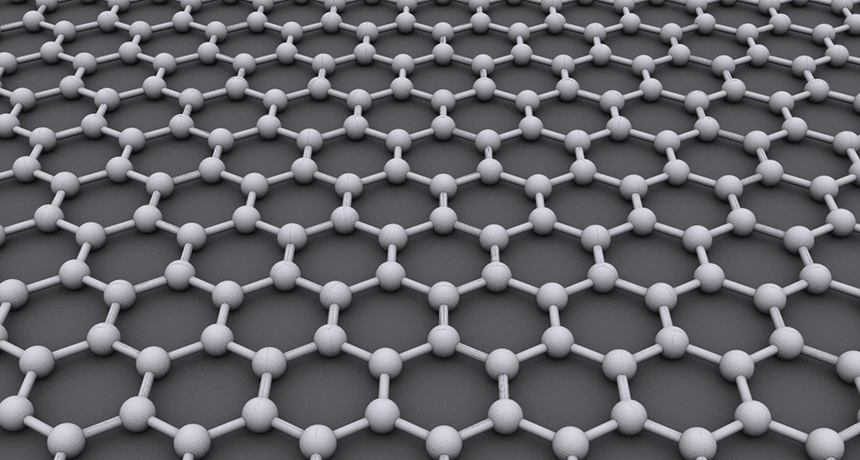
Scientists Say: Graphene
This is a single layer of carbon atoms, linked to each other in a flat sheet. It’s super strong, super flexible and conducts current, too.
- Chemistry
Can concrete conquer air pollution?
Powdered concrete could remove the sulfur dioxide and other pollutants that are spewed into the air when electric-power plants burn fossil fuels, a lab study suggests.
- Tech
Cool Jobs: Bringing you summer thrills
Fireworks and ride designers combine math and science to engineer some frightfully good summer fun.
- Chemistry
New ‘magnet’ pulls pesky nonstick pollutants from drinking water
Chemicals that help make pans nonstick can themselves stick around forever in the environment. But a new material can remove them from drinking water.
- Chemistry
Scientists Say: Photochromic
Photochromic chemicals change shape when exposed to a specific wavelength of light. The shape change changes the chemical’s color.
- Chemistry
Scientists Say: Catalyst
Sometimes a chemical reaction can take a while. If speed is needed, a catalyst can help.
- Chemistry
Trees can make summer ozone levels much worse
The greenery can release chemicals into the air that react with combustion pollutants to make ozone. And trees release more of those chemicals where it gets really hot, a new study finds.
- Chemistry
World’s deepest zoo harbors clues to extraterrestrial life
Scientists have found a wide range of life deep below Earth’s surface. The discoveries could help inform our search for life on other planets.