Matter and Its Interactions
- Physics
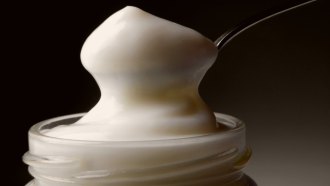
Weirdly, mayo can help study conditions ripe for nuclear fusion
Yes, mayo. The texture of the sandwich spread is perfect for mimicking what a fusion fuel capsule goes through when blasted with lasers.
- Health & Medicine
Scientists Say: THC
The active chemical in marijuana might have some medicinal value. But studies point to THC's potential risks, especially for teens.
- Health & Medicine
Skin appears to be no barrier for some common ‘forever’ chemicals
These PFAS, which have been linked to health problems, show up in many products that we touch every day — including clothes and food packaging.
- Climate
Stashing more CO2 in the ocean could slow climate change
More research is needed on ways to safely remove some CO2 from the water to make room for more — such as by seaweed farming and iron fertilization.
- Animals
Metal gives the teeth of Komodo dragons their super strength
Investigating Komodo dragons' ironclad teeth in greater detail could also help solve a dental mystery in dinosaurs.
- Chemistry
The periodic table might soon have a new element
A new technique could be used to make the undiscovered element 120.
- Earth
Superman’s kryptonite doesn’t have a true equal on Earth
Though not quite kryptonite, some Earth minerals can glow under ultraviolet light. Excited electrons cause these real-life power stones to light up.
- Materials Science
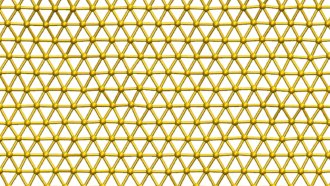
Scientists Say: Goldene
Making this metallic, two-dimensional (2-D) material is difficult — but super-thin sheets of gold could have uses in electronics and chemistry.
- Chemistry
Scientists Say: Excitation
Excited electrons are to thank for dazzling fireworks displays, plants harnessing energy, the semiconductors behind modern tech and more.
- Materials Science
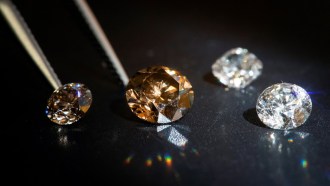
New lab trick makes diamonds without extreme pressure
The lab-grown diamonds form in a liquid of gallium, iron, nickel and silicon.
- Chemistry
Scientists Say: Methane
Used to cook food and heat homes, this potent greenhouse gas accounts for 30 percent of the warming of our climate.
- Chemistry
Experiment: How to make the boldest, brightest tie-dye!
Clothes are made from a variety of fibers, from natural to synthetic ones. Let’s explore how different fibers react with dyes.