HS-ESS3-4
Evaluate or refine a technological solution that reduces impacts of human activities on natural systems.
- Environment
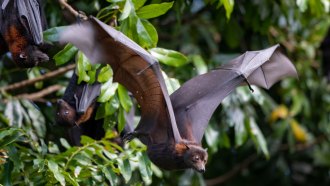
Protecting forests may help head off future pandemics
Hungry bats are more likely to shed harmful viruses to people or livestock when they spread out to hunt food. Conserving forests may limit this risk.
- Climate
Eight ways you can cut your carbon footprint
Learn how you can limit the climate-warming gases associated with what you eat, the products you buy and the energy you use.
- Climate
The world is aiming for ‘net zero’ emissions of greenhouse gases
Nations are charting how they might ‘zero’ out their releases of climate-warming gases. Success might greatly lower the risks of climate catastrophes.
- Environment
For a better brick, just add poop
Sewage sludge. Cow dung. They’re not just waste — scientists are finding uses for processed poop in construction materials.
- Climate
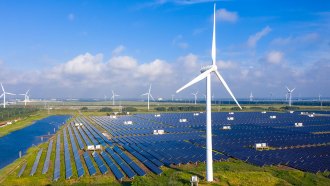
Green energy is cheaper than fossil fuels, a new study finds
Switching over to clean, renewable power — and away from fossil fuels — could save trillions of dollars by 2050, a new study finds.
- Climate
Explainer: What is decarbonization?
Lowering carbon levels in our atmosphere to stabilize the climate may start with switching from fossil fuels to greener energy sources.
- Tech
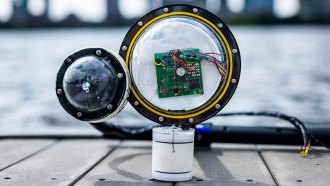
Underwater cameras get a new power source — sound!
Needing no batteries, a new digital camera can run almost continuously to offer new, deeper insights into the ocean world.
- Animals
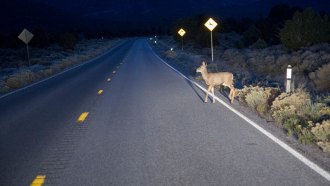
Cars hit more deer in the week after daylight saving time ends
In the days right after most Americans turn back the clock, vehicle crashes with deer increase by 16 percent, a new study shows.
- Environment
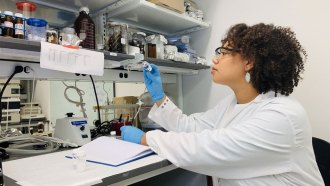
This chemist uses online videos to teach about the perils of microplastics
Imari Walker says her journey as a scientist and science communicator lets her talk about and advocate for her passion.
- Environment
Bacterial ‘living wires’ could help protect the seas and climate
Long, thin bacteria that conduct electricity may be able to help clean up oil spills and reduce emissions of methane, a powerful greenhouse gas.
- Climate
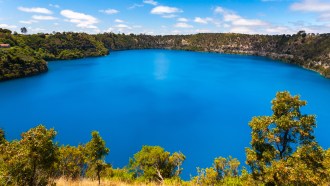
Warming temps could turn some blue lakes green or brown
Slightly warmer summers could cause thousands of blue lakes to become a murky green or brown, according to a tally of color in 85,000 lakes worldwide.
- Chemistry
No trees were harmed to 3-D print this piece of wood
How clever! Scientists used print-speed adjustments to control how flat, 3-D printed shapes morph into complex wooden objects.