HS-ETS1-2
Design a solution to a complex real-world problem by breaking it down into smaller, more manageable problems that can be solved through engineering.
- Health & Medicine
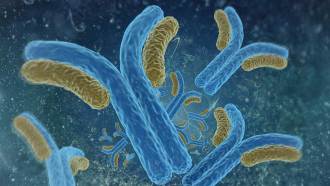
A glowing new way to measure antibodies
Researchers invent a way to detect and measure antibodies with glowing proteins. Antibodies can mark exposure to various diseases.
- Archaeology
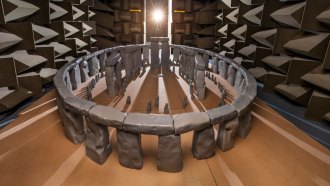
Stonehenge enhanced voices and music within the stone ring
Scientists built a 'Stonehenge Lego' model in a sound chamber to study how sound would have behaved in the ancient stone circle.
- Life
If bacteria stick together, they can survive for years in space
Tiny clumps of bacteria can survive at least three years in outer space. This raises the prospect of interplanetary travel by microbial life.
- Brain
A secret of science: Mistakes boost understanding
Everyone makes mistakes. It turns out that how you view them says a lot about how — and how much — you’ll learn.
- Brain
A bit of stress may help young people build resilience
A comfortable life may sound fun but may not be so healthy in the long run. A study in monkeys shows there may be a ‘sweet spot’ when it comes to stress.
- Environment
Dust can infect animals with flu, raising coronavirus concerns
Dust particles kicked up from some virus-contaminated surface can become a source of new infections, rodent data show.
- Computing
A robot referee can really keep its ‘eye’ on the ball
Have you ever yelled at a referee for making a bad call? Technology has begun taking over some calls in an attempt to make sports fairer.
- Animals
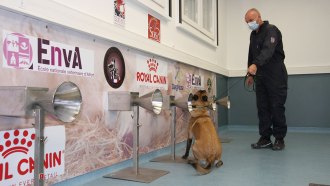
Viral scents? Dogs sniff out coronavirus in human sweat
Researchers train dogs to sniff out COVID-19. In the United Arab Emirates, sniffer dogs have already begun identifying infected passengers at airports.
- Life
For teens, big problems may lead to meaningful research
Several teens who competed at the Regeneron Science Talent Search applied their STEM know-how to solve problems they or their communities faced.
- Brain
Can we taste fat? The brain thinks so
Scientists had not considered fat a 'taste.' The brain begs to differ, new data show.
- Physics
A contrast between shadows and light can now generate electricity
A new device exploits the contrast between bright spots and shade to produce a current that can power small electronics.
- Animals
Toxic germs on its skin make this newt deadly
Bacteria living on the skin of some rough-skinned newts make tetrodotoxin. This paralyzing poison is also found in pufferfish.